
How to Stop Wasting Food: Use-It-Up Cooking, Explained
The average household throws away a startling share of the food it buys, and most of it is preventable. Here is a practical way to stop wasting food: shop, store, and cook from what you already have on hand.
A huge share of the food households buy gets thrown out, often a third or more, and almost none of it goes bad on purpose. It goes bad because we forget it, store it wrong, or never figure out what to make with the half a cabbage and the lonely zucchini sitting in the drawer.
The good news is that wasting less is not about willpower or strict meal plans. It is a few small habits around how you shop, store, and cook. Here is the whole system, broken into the parts that actually move the needle.
1. Start cooking from what you already have
The single biggest shift is reversing the usual order. Most of us pick a recipe, then shop for it, and the food we already own keeps aging in the back. Flip it. Before you plan anything, look at what is about to turn and build the meal around that.
Open the fridge and ask one question: what needs using first? The spinach going limp, the chicken near its date, the heel of bread. That ingredient becomes the anchor, and you build a meal around it instead of letting it die quietly behind the condiments.
2. Store produce so it lasts twice as long
A lot of waste is just bad storage. A few fixes buy you days or even weeks:
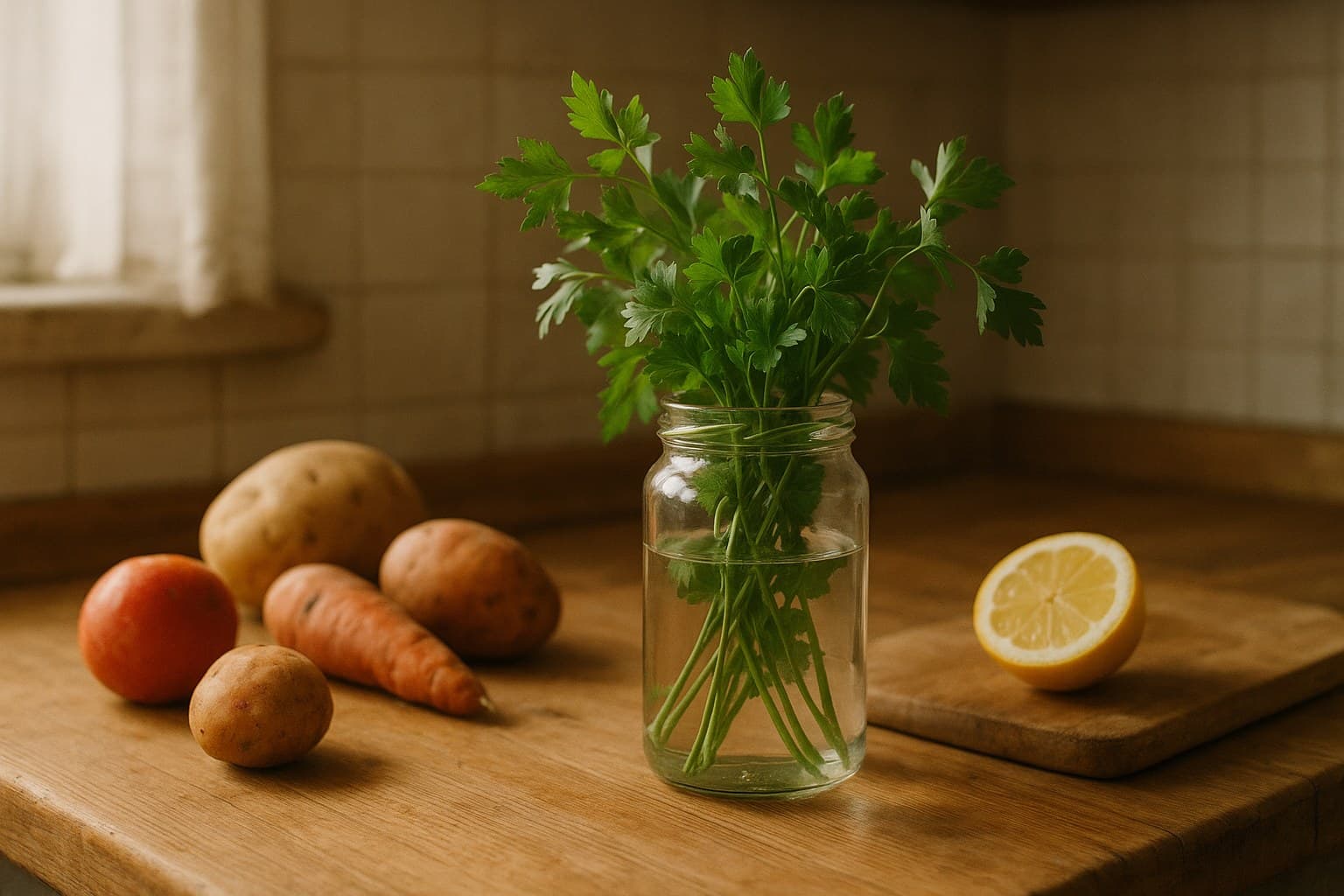
- Herbs like parsley and cilantro: trim the stems and stand them in a jar of water like flowers, loosely covered, in the fridge. They go from three days to two weeks.
- Leafy greens: wash, dry well, and store with a paper towel to absorb moisture. Wet greens rot fast.
- Onions, garlic, and potatoes: cool, dark, dry, and never in the fridge. Keep potatoes away from onions, which speed each other's spoiling.
- Berries: do not wash until you eat them. Water on the skin invites mold.
- Bananas, apples, and tomatoes: keep them on their own. They give off a ripening gas that ages nearby produce faster.
3. Shop a little smaller, a little more often
The big once-a-week haul feels efficient and quietly causes most waste, because fresh food does not last a full seven days and the back half of the week becomes a graveyard. You do not have to shop every day, but buying for three or four days at a time, especially for produce and fresh protein, means far less of it turns before you get to it.
Make a rough list before you go and loosely stick to it. Impulse buys are where the never-used half-bag of arugula comes from.
4. Use the parts you usually throw away
A lot of what hits the bin is perfectly good food we have just been trained to discard:
- Broccoli and cauliflower stems: peel and slice them, they roast or stir-fry beautifully and are sweeter than the florets.
- Herb stems: blend them into pesto, sauces, or soups instead of binning them.
- Stale bread: blitz it into breadcrumbs, cube it for croutons, or make a quick bread pudding or French toast.
- Vegetable trimmings: stash onion ends, carrot peels, and celery tops in a freezer bag, and when it is full, simmer them into stock.
- Wilting greens and soft vegetables: they are still fine cooked, even if sad raw. Into a soup, omelet, or stir-fry they go.
5. Treat your freezer as a pause button
The freezer stops the clock. Anytime something is about to turn and you cannot use it today, freeze it. Bread, most cooked meals, browning bananas (peel them first), grated cheese, leftover herbs in a little oil, even milk and cooked rice all freeze well.
6. Make leftovers a plan, not an accident
Leftovers waste happens when they sit in an opaque container at the back until they are scary. Two fixes. First, store them in clear containers at the front where you can see them. Second, give yourself a leftover meal on purpose, a lunch or a quick dinner built to clear the fridge. Roast vegetables become a grain bowl, last night's chicken becomes today's wrap or fried rice, odds and ends become a frittata or soup. Almost anything ends up in fried rice or a soup with a bit of seasoning.
7. Stop trusting the printed date blindly
A lot of food gets tossed the day a label says so, while it is completely fine. Best before is about quality, not safety, so food past it is usually still good, just maybe slightly less peak. Use before is the one to respect more carefully on things like raw meat and fish.
For most things, trust your senses. Eggs that sink in water are fresh. Yogurt that smells and looks normal is fine well past its date. Bread with no mold is fine, just toast it. You will save real money and real food by checking instead of obeying the print.
Put these together and wasting less stops feeling like a chore. You shop a touch smaller, store things so they survive, and let what you already have decide what is for dinner, or lunch, or breakfast. Less in the bin, less money gone, and oddly, more interesting cooking, because using up what is on hand forces a little creativity.
Tell Pann the one thing you need to use up and it builds a real meal around it, sized to you, then cooks it with you step by step. Use-it-up cooking, without the staring into the fridge.