
Meal Prep for Beginners: The 4-Container System
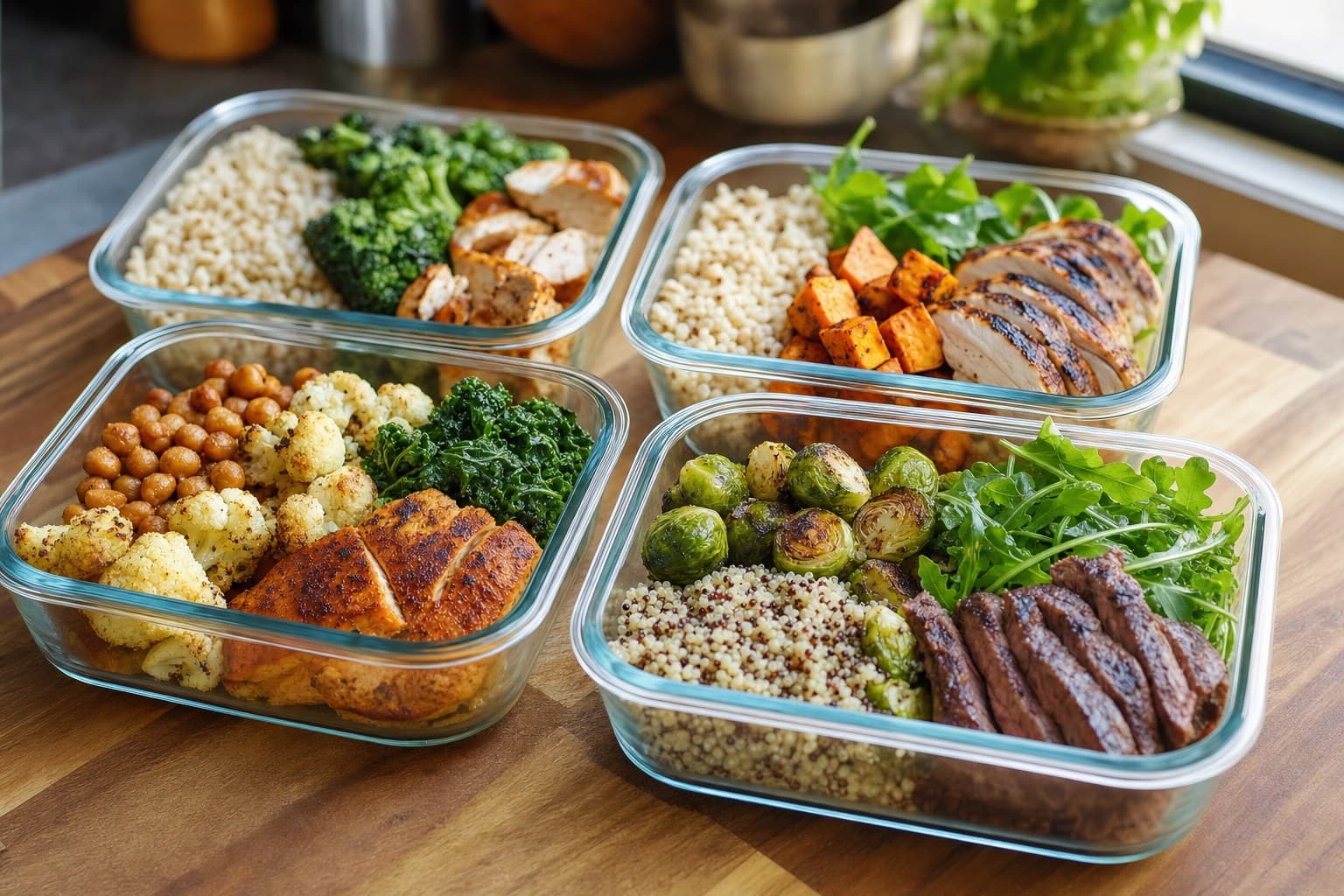
Meal prep does not mean a Sunday lost to 12 identical tubs you grow to hate. The 4-container system is the gentle version: one short cook, four mix-and-match meals, zero recipe overwhelm.
Most people try meal prep once, spend a whole Sunday cooking 12 identical containers of chicken and broccoli, eat three, and quietly give up by Wednesday. That is not a personal failure. It is a bad system. Cooking the same dinner ten times is boring, and boredom is what kills meal prep, not effort.
Here is how to think about it instead. You do not prep finished meals. You prep components, and you assemble different meals from them all week. The 4-container system is the simplest way in: cook four building blocks once, store them apart, and combine them into a dozen different plates. One protein, one grain, one tray of veg, and one sauce can become a rice bowl, a wrap, a salad, and a stir-fry. Same prep, four different dinners.
The 4 Containers Explained
Everything rests on four labelled tubs. Each holds one type of component, not one type of meal. This is the whole idea, so get it right and the rest is easy.
- Container one is a protein. Cook a big batch of one: shredded chicken, browned mince, baked tofu, or a pot of beans.
- Container two is a grain or carb. Make a big batch of rice, pasta, couscous, or roast potatoes that reheats well.
- Container three is vegetables. Roast a big tray of mixed veg, the most useful thing in the fridge all week.
- Container four is a sauce or dressing. A jar of something punchy is what makes the same components taste different each day.
- Store all four separately, never pre-mixed, so you can build a fresh-feeling meal in two minutes whenever you are hungry.
1. The One-Hour Cook That Fills All Four
You can fill every container in about an hour of mostly hands-off cooking, because three of the four cook themselves while you deal with the fourth. The oven and the pot do the work.
- Put the grain on first. Get rice or pasta cooking, or potatoes roasting, since it needs the least attention once it is going.
- While that runs, chop a big tray of vegetables, toss in oil and salt, and roast them hot until golden at the edges.
- Cook your protein on the hob at the same time: brown the mince, poach and shred the chicken, or bake the tofu alongside the veg.
- Make the sauce while everything cooks. It can be as simple as yoghurt with garlic and lemon, or oil, vinegar, and mustard shaken in a jar.
- As each one finishes, cool it and pack it into its own container. In an hour you are done and the week is sorted.
2. Mix and Match Into a Week of Meals
Now the fun part. The same four containers become a different meal each day just by changing the format and the sauce. This is what stops the boredom that ends most meal prep.
- Day one, build a grain bowl: grain on the bottom, protein and veg on top, sauce over everything.
- Day two, make a wrap: roll the protein and veg into a tortilla with the sauce, skip the grain.
- Day three, go for a salad: pile the protein and veg over leaves with the sauce as a dressing.
- Day four, stir-fry it: heat the protein, veg, and grain together fast in a hot pan with a splash of soy.
- Swap the sauce to swap the mood: a garlicky yoghurt one day, a soy and chilli mix the next, and it feels new each time.
3. Keep It Fresh All Week
Prepped food only works if it still tastes good on day four. A few habits keep the containers appealing right to the end of the week instead of fading into a chore.
- Add a fresh element when you eat, not when you prep: a handful of leaves, herbs, a squeeze of lemon, or some crunch.
- Keep the sauce off until serving so nothing goes soggy and the flavours stay bright.
- Eat the most perishable container first. Cooked fish and soft veg go early; sturdy grains and roots last longest.
- Only prep three or four days at a time at the start. A week is a lot of fridge life for a beginner to use up.
- Freeze a portion of protein and grain if you over-catered, so nothing is wasted and you have a backup dinner.
- Four matching containers — The whole system runs on four tubs that stack neatly and seal well. Matching ones save space and make it obvious what you have.
- A large roasting tray — Roasted veg is the backbone of the week. A big tray means you roast once instead of in fiddly batches.
- A small jar with a lid — For shaking a dressing or sauce. Keeping it separate is what makes day-four food still taste fresh.
- A lidded pot — For batch-cooking the grain and the protein. The lid lets you simmer rice or beans hands-off while you do the rest.
More Quick Wins for Starting Out
- Pick one protein, one grain, and one veg you genuinely like. Do not prep food you are not excited to eat.
- Cook the grain and veg at the same time to keep the whole prep under an hour.
- Buy two or three sauces you can rotate so the same components never taste the same twice.
- Label each container with what it is and the date, so the fridge stays organised and nothing gets forgotten.
- Start with just lunches before you try to prep every meal. One win builds the habit.
- Keep a bag of frozen veg as backup for when the fresh tray runs out mid-week.
- Eat the components cold or hot; not everything needs reheating, which saves time and a microwave queue.
- If a container is going off, turn it into a quick soup or fried rice rather than binning it.
Tell Pann the protein, grain, and veg you actually like and it builds your four containers around them, quietly sized to your goal with no counting, then gives you a different meal to assemble each day and walks you through the cook. No 12-tub Sunday.