
The Only 3 Pans a Beginner Cook Actually Needs
A beginner needs three pans: a 10-inch nonstick frying pan for eggs and pancakes, a 10 to 12-inch stainless steel skillet for searing and browning, and a 2 to 3-quart saucepan with a lid for rice, pasta and soup. Together they cover breakfast, lunch, dinner and snacks. Skip the 12-piece set.
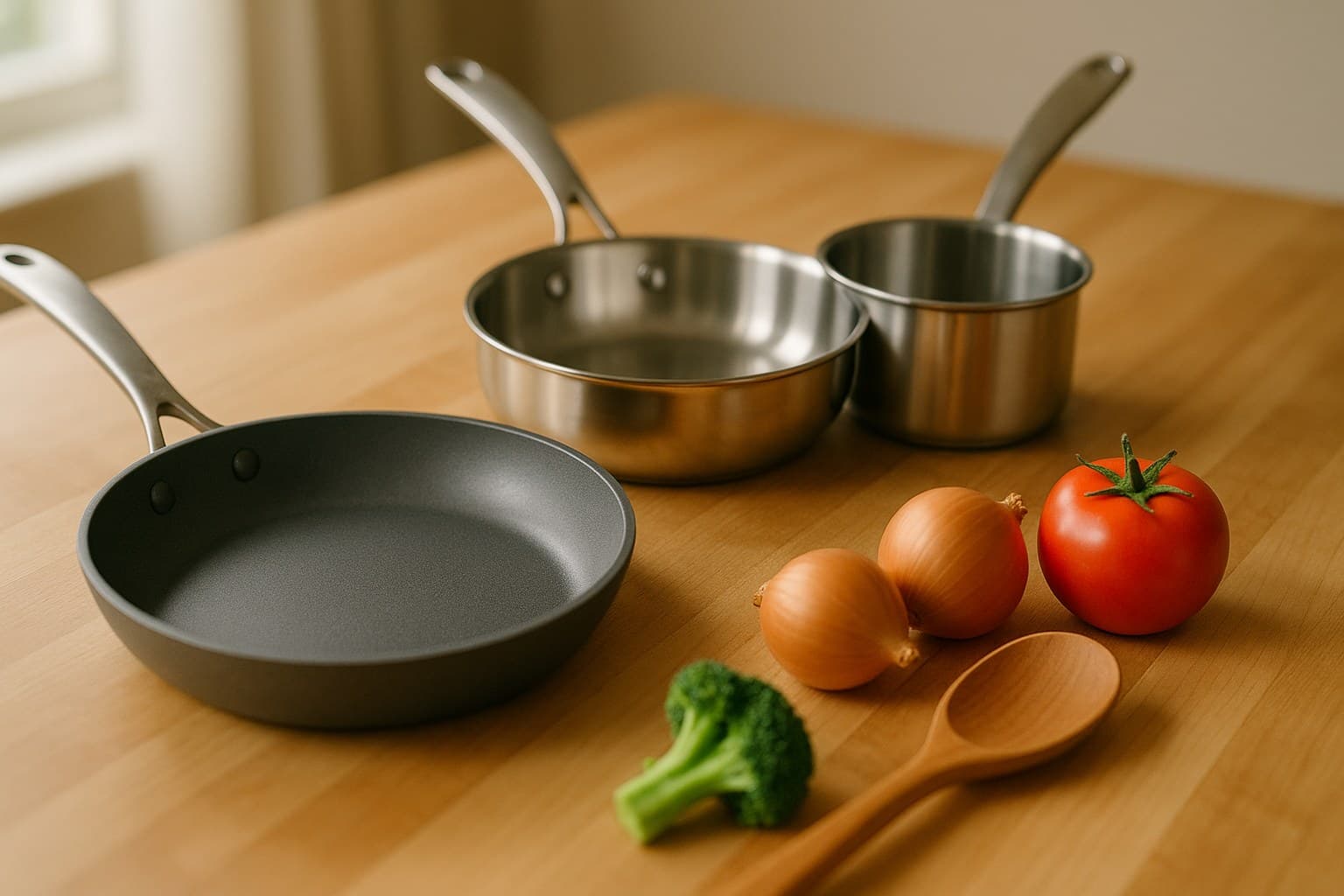
Cookware sets are a trap. A beginner needs exactly three pans to cook almost any meal. Here is what each one does, how to buy good ones, and what to ignore for now.
Walk into any kitchen store and they will try to sell you a 12-piece set with pans you will never touch. Ignore it. When you are starting out, you need exactly three pans, and between them they cook almost everything: breakfast, lunch, dinner, and the snacks in between. Buy these three well and you can skip the rest for a long time.
Here is each one, what it does, and why it earns a spot before anything else. Then a quick note on what to skip and how to buy without overspending.
Pan one: a nonstick frying pan
Start here. A 10-inch nonstick frying pan is the most forgiving pan you can own and the one a beginner reaches for daily. Eggs slide right out, pancakes flip clean, and you can cook with barely any oil because nothing grabs the surface. It is the pan that makes you feel like you can actually cook, which matters when you are learning.
- Scrambled eggs, omelets and fried eggs
- Pancakes and French toast
- Quick fish fillets and grilled cheese
- Soft vegetables and a fast veggie sauce
One rule keeps it alive: medium heat only and never a metal tool. Use a wood or silicone spatula and it will last you years. Crank it too hot and the coating breaks down fast.
Pan two: a stainless steel skillet
This is the workhorse nonstick cannot be. A 10 or 12-inch stainless steel skillet takes high heat without flinching, so it browns and crisps in a way the nonstick never will. This is the pan for a seared chicken breast, golden onions, a quick stir-fry, or anything you want to get a real crust on. It also makes pan sauces, because the browned bits left in the pan are pure flavor you can deglaze into a sauce.
Stainless feels harder at first because food can stick, but it is nearly indestructible, safe with metal tools, dishwasher-friendly, and oven-safe. Learn the hot-pan trick above and it quickly becomes your most-used pan.
Pan three: a saucepan with a lid
The third pan is the quiet one that earns its keep every single day. A 2 to 3-quart saucepan with a lid handles everything wet: pasta and rice, soups, a pot of oats for breakfast, boiled or steamed veg, a simmering sauce, or a batch of beans. The lid matters more than people think, because it traps heat for faster boiling and gentle simmering.
- Rice, pasta, couscous and grains
- Porridge and overnight oats reheated
- Soups, stocks and stews for one or two
- Steamed and boiled vegetables
What these three cover together
Put them side by side and you have a full kitchen. Eggs and pancakes go in the nonstick. A seared protein and charred veg go in the stainless. Rice, pasta, and soup go in the saucepan. That covers breakfast, a packed lunch, a real dinner, and most snacks, with nothing left over that you genuinely cannot make. The gaps are specialist jobs, not everyday ones.
What to skip for now
These are real tools, but none of them belongs in your first three. Add them later, one at a time, when a specific dish keeps asking for them.
- Dutch oven: brilliant for braises and bread, but heavy and slow, so it sits unused until you cook those often.
- Wok: lovely for stir-fry, but a hot stainless skillet does the same job at home.
- Grill pan: niche, and mostly cosmetic grill lines you can live without.
- Giant stockpot: only needed for big batches or stock, which a beginner rarely makes early on.
- Crepe pan, egg-poacher inserts, and single-use gadgets: skip them all.
How to buy them without overspending
You do not need premium brands. Look for a heavy, flat base that sits evenly on the burner, because thin pans warp and cook unevenly. Check the handle feels solid and the pan is oven-safe if you can manage it. Buy the nonstick mid-range, since it is a consumable you will replace anyway, and spend a little more on the stainless and saucepan because those last for decades.
- 10 inch nonstick frying pan — The forgiving everyday pan for eggs, pancakes and anything delicate.
- 10 to 12 inch stainless steel skillet — The high-heat workhorse for searing, browning and pan sauces.
- 2 to 3 quart saucepan with lid — Everything wet: rice, pasta, soups, oats and steamed veg.
Start with these three, learn what each one does well, and you will cook more meals than most people with a cupboard full of gear. Good cooking comes from knowing your pans, not from owning a lot of them.
Tell Pann the one thing you've got and which pan you want to use, and it builds a real meal around it, then walks you through every step so the gear never gets in the way.
Frequently asked questions
What pans should I buy first as a beginner?
Buy a 10-inch nonstick frying pan, a 10 to 12-inch stainless steel skillet, and a 2 to 3-quart saucepan with a lid. Between them they cook almost every everyday meal, so you can leave the rest of the cupboard empty for a long time.
Is a cheap 12-piece cookware set worth it?
No. A bargain set spreads thin metal across pans that warp and coatings that fail. Three good pans beat twelve flimsy ones and cost about the same once you add it up. Put the money into fewer, heavier pieces.
Why does food stick to my stainless steel pan?
Usually because the pan is too cool. Heat it for a minute, add oil, wait until the oil shimmers, then add the food. It releases on its own once it has browned, so resist poking it while it cooks.
How do I stop my nonstick pan wearing out?
Two rules. Medium heat only, and never a metal tool. Use a wood or silicone spatula and the pan will last years. Crank it too hot and the coating breaks down fast, which is why nonstick counts as a consumable.
Do I need a dutch oven or a wok when starting out?
Not yet. A dutch oven is brilliant for braises and bread but heavy and slow, so it sits unused until you cook those often. A hot stainless skillet handles stir-fry at home. Add specialist pans later, one at a time.
How much should I spend on my first pans?
You do not need premium brands. Look for a heavy, flat base that sits evenly on the burner and a solid handle. Buy the nonstick mid-range since you will replace it anyway, and spend a little more on the stainless and saucepan.