
How to Season a Cast Iron Pan (and Keep It Nonstick)
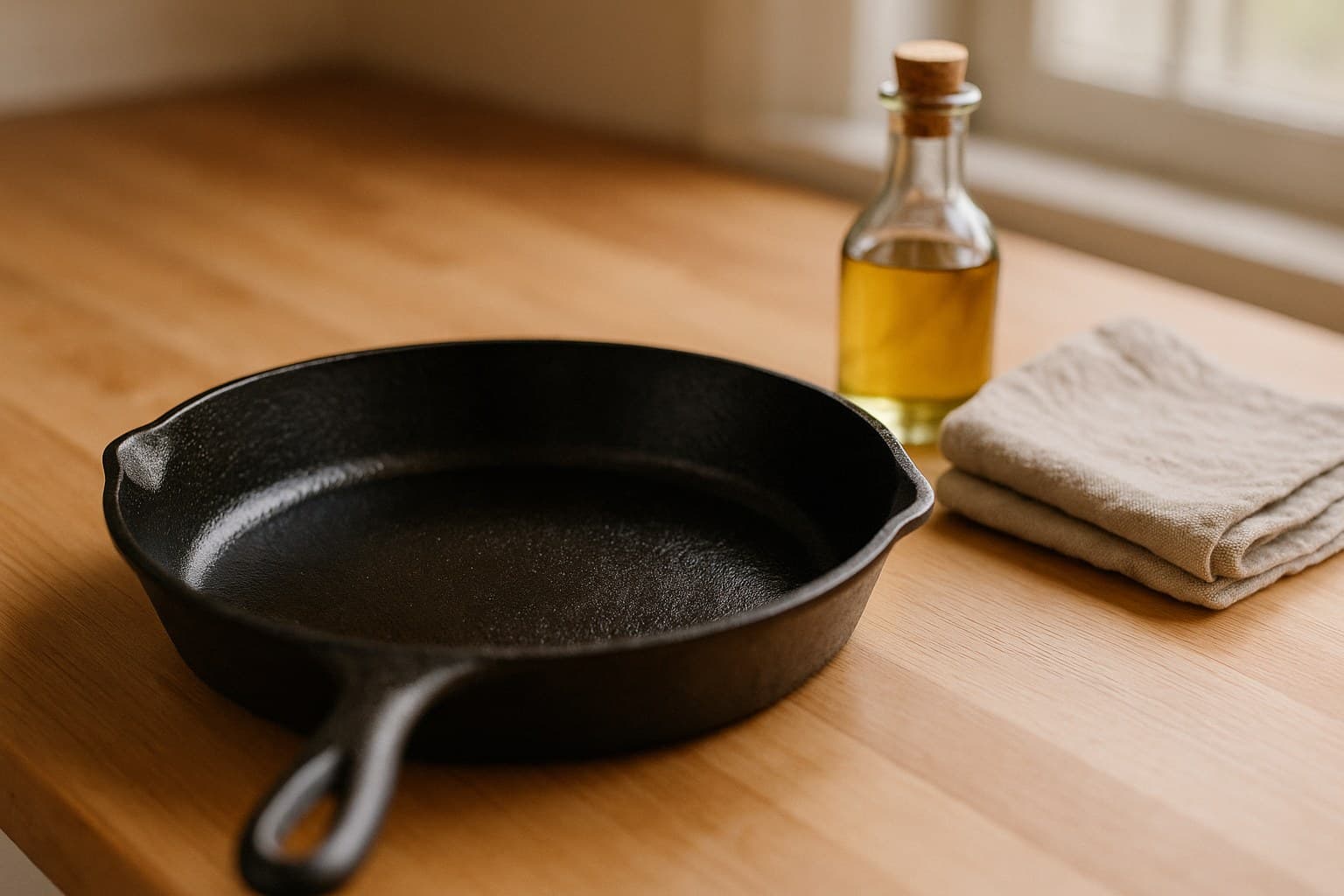
Seasoning is just thin layers of oil baked onto iron until they turn slick and dark. Here is how to build that surface from scratch and keep it nonstick for years with a couple of small habits.
A good cast iron pan can outlive you. The reason people give up on them is the same one: they never built or kept the seasoning, so food stuck, the pan rusted, and it ended up at the back of a cupboard. Seasoning sounds like a dark art. It is not. It is thin layers of oil baked onto iron until they harden into a slick, naturally nonstick surface.
Here is exactly how to do it from scratch, and the small daily habits that keep it slick for years.
1. What seasoning actually is
When you heat a thin film of oil on iron past its smoke point, it does not just burn off. It bonds to the metal and hardens into a smooth, plastic-like layer called polymerized oil. Stack up enough of these microscopically thin layers and you get a dark, glassy surface that food slides off. That dark patina is the seasoning. It is not dirt, and you never want to scrub it away.
The key word is thin. A thick coat of oil will not bond evenly. It turns sticky and tacky instead. Almost every seasoning failure comes from using too much oil.
2. The oil to use
You want a neutral oil with a high smoke point. The exact oil matters less than people online claim, but good choices are:
- Grapeseed oil. High smoke point, neutral, bonds cleanly. A favourite for a reason.
- Canola or vegetable oil. Cheap, easy, works perfectly well.
- Flaxseed oil. Hardens fast and slick, but can flake if you build layers too thick, so use sparingly.
- Avoid olive oil and butter for seasoning. Their smoke points are too low and they go gummy.
3. How to season from scratch
Whether your pan is brand new, bare, or you are starting over after rust, the method is the same. Set aside about an hour, most of it hands-off in the oven.
- Wash the pan with warm soapy water and dry it completely. Yes, soap is fine here, you are about to bake the whole thing.
- Put it on the stove on low heat for a couple of minutes to drive off every trace of moisture. Water is the enemy of iron.
- Add about half a teaspoon of oil and rub it over the entire pan, inside, outside, handle, with a cloth or paper towel.
- Now wipe it all back off. The surface should look almost dry, just barely sheened. This is the step people skip, and it is the most important one.
- Place the pan upside down in an oven at 220C, with a tray or foil on the rack below to catch drips. Bake for 1 hour, then turn the oven off and let the pan cool inside.
- Repeat the oil-wipe-bake cycle 2 to 3 times for a strong base. Each pass adds a layer and deepens the colour from grey toward black.
4. The daily habit that keeps it nonstick
Here is the part that matters more than the from-scratch ritual: every time you cook with a little oil or fat, you are adding to the seasoning. A pan you use often for searing chicken thighs, frying eggs, or crisping potatoes basically seasons itself. The best way to keep cast iron nonstick is simply to cook in it regularly.
After each cook, the routine takes about a minute:
- Rinse while still warm and scrub off any stuck bits with a brush or a chainmail scrubber. A little soap is fine, the modern stuff will not strip a good seasoning.
- Dry it completely with a towel, then put it back on low heat for a minute so any hidden moisture evaporates.
- Rub a few drops of oil over the cooking surface, wipe almost all of it back off, and put it away. That thin film protects it and feeds the seasoning.
5. How to fix a rusty pan
Rust looks like a death sentence and is not. Iron is forgiving:
- Scrub the rust off with steel wool or a stiff brush, with a little dish soap, until you are back to clean grey metal.
- Rinse, dry completely, and warm it on the stove to drive off moisture.
- Re-season from scratch using the oil-wipe-bake cycle above, 2 or 3 passes.
Within a few cooks it will be back to slick and black, as if the rust never happened.
6. What to never do
- Do not soak it or leave it wet in the sink. Standing water rusts iron fast.
- Do not put it in the dishwasher. The long water cycle and harsh detergent strip the seasoning and invite rust.
- Do not store it with a tight lid on while damp. Trapped moisture rusts the inside.
- Do not scrub away the dark patina thinking it is grime. That dark layer is the whole point of the pan.
Get the from-scratch layers down, then just cook in it and dry it. That is the entire job. A cast iron pan rewards the lazy-but-consistent owner more than the perfectionist, and once it is slick, frying an egg with no fuss is genuinely satisfying.
A nonstick cast iron skillet is begging to sear something. Tell Pann the one thing you have got, like chicken or salmon, and it builds a real meal around it, then cooks it with you step by step.