
Do You Actually Need a Dutch Oven? (Honest Answer)
No, you do not strictly need a dutch oven. It earns its space if you regularly cook braises, stews, batch soups or no-knead bread, where its heavy walls and tight lid beat a normal pot. If your cooking is fast and light, a heavy stockpot covers most of it. You can always add one later.
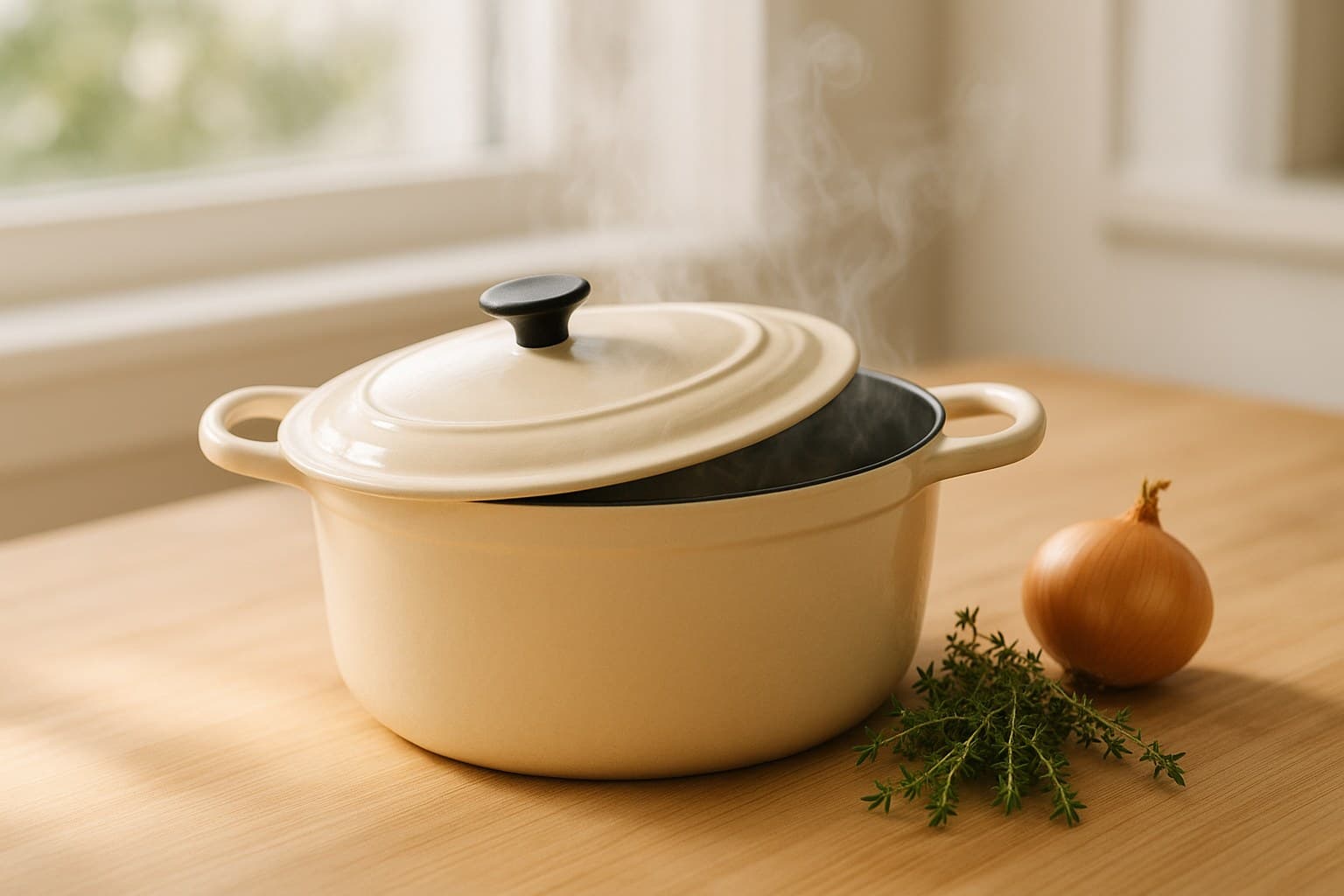
A dutch oven is heavy, pricey and lives in cupboards half-used. Here is the honest answer on whether you need one, what it actually does better, and when a cheap pot wins instead.
A dutch oven is one of those pieces of kit everyone tells you to buy, then it sits in the cupboard because it weighs as much as a small dog and you forgot what it is for. So let me give you the honest answer instead of the marketing one. You do not strictly need a dutch oven. But there is a real set of jobs it does better than anything else, and if you cook those jobs often, it earns its space fast.
Below I lay out what it actually is, the things it genuinely beats other pots at, where it is overkill, and the cheaper option that covers most of the same ground. By the end you will know whether yours stays on the wishlist or goes in the basket.
What a dutch oven actually is
It is a thick, heavy pot, usually cast iron coated in enamel, with a tight-fitting lid. That mass is the whole point. It heats slowly and evenly, holds a steady low temperature for hours, and goes straight from a stovetop burner into the oven. The lid traps moisture so food braises in its own steam. Think of it as a slow, even, oven-safe pot built to hold heat like a brick.
Five things it genuinely does better
These are the jobs where a dutch oven is not just nice, it is noticeably better than a normal pot.
- Braises and stews. Brown the meat on the stovetop, add liquid, lid on, into a low oven for a few hours. The even heat means nothing scorches and the meat falls apart. This is its signature move.
- No-knead bread. The trapped steam inside the lid gives a homemade loaf a bakery-style crust you cannot get on a bare tray. If you bake bread, this alone can justify it.
- Big-batch soups and chilis. The heavy base stops the bottom catching while a thick soup simmers for an hour, and it holds enough for a family plus leftovers.
- Slow-cooked beans and grains. Steady gentle heat cooks dried beans evenly without constant stirring or babysitting.
- Deep frying. The thick walls hold the oil temperature stable when you drop food in, so you get crisp results instead of greasy ones.
Where it is overkill
Be honest with yourself about how you cook. If your week is mostly quick stir-fries, pasta, eggs, and a fast protein with veg, a dutch oven barely comes out. It is too heavy for a quick sauce, too slow to heat for a 12-minute dinner, and a pain to lift and wash for a small job. A dutch oven rewards slow weekend cooking, not fast weeknight cooking.
- Boiling pasta: a normal pot is lighter and just as good.
- Quick sauces: a regular saucepan heats faster and washes easier.
- A fast solo dinner: the weight and the cleanup are not worth it for one portion.
The cheaper pot that covers most of it
If you want most of the benefit without the price tag, a heavy stockpot with a thick base and a good lid does a lot of the same work. You lose the bakery bread crust and some of the even oven heat, but for soups, stews, and batch cooking it gets you 80 percent of the way there. A solid stockpot you already own beats a dutch oven you never lift.
There is also the enamel-vs-bare-cast-iron question. Enameled dutch ovens cost more but need no seasoning, handle acidic tomato and wine sauces without trouble, and wipe clean. For most home cooks the enamel is worth it for the lower maintenance.
So, should you buy one?
Here is the honest test. Buy one if you regularly cook braises, stews, batch soups, or bread, or you want to start. Those dishes turn out genuinely better and you will use it weekly. Skip it for now if your cooking is fast and light, and put the money toward a good skillet and a sharp knife instead. You can always add one later when a slow Sunday braise starts calling.
The right answer depends entirely on what you cook, not on what a list told you to own. A dutch oven is a brilliant tool for slow, hearty food across every meal, from a Sunday braise to a big pot of breakfast oats, but only if those meals are actually on your menu.
Tell Pann what you've got in the cupboard and the one ingredient you want to cook, and it builds a real meal around it, then walks you through it step by step, no special gear required.
Frequently asked questions
Is a dutch oven worth it?
It is worth it if you regularly cook braises, stews, batch soups or bread, or want to start. Those dishes turn out genuinely better and you will use it weekly. If your cooking is fast and light, put the money toward a good skillet and a sharp knife instead.
What can you actually cook in a dutch oven?
Five jobs it does better than anything else: braises and stews, no-knead bread with a bakery-style crust, big-batch soups and chilis, slow-cooked beans and grains, and deep frying, because the thick walls hold the oil temperature steady.
What is the difference between a dutch oven and a regular pot?
Mass. A dutch oven is thick, heavy cast iron, usually coated in enamel, with a tight-fitting lid. It heats slowly and evenly, holds a low temperature for hours, goes from the hob into the oven, and traps moisture so food braises in its own steam.
Can I use a stockpot instead of a dutch oven?
Mostly, yes. A heavy stockpot with a thick base and a good lid does a lot of the same work. You lose the bakery bread crust and some of the even oven heat, but for soups, stews and batch cooking it gets you 80 percent of the way there.
Is enameled cast iron worth the extra money?
For most home cooks, yes. Enameled dutch ovens cost more but need no seasoning, handle acidic tomato and wine sauces without trouble, and wipe clean. The lower maintenance is what makes them worth the difference over bare cast iron.
When is a dutch oven overkill?
When your week is mostly quick stir-fries, pasta, eggs and a fast protein with veg. It is too heavy for a quick sauce, too slow to heat for a 12-minute dinner, and a pain to lift and wash for one portion. It rewards slow weekend cooking.