
Cast Iron vs Nonstick: Which Pan for Which Job
Cast iron is for heat and browning: steak, burgers, chops, crispy salmon skin, charred veg. Nonstick is for delicate and sticky: eggs, pancakes, soft white fish, and acidic tomato or pan sauces that strip cast iron seasoning. Nonstick coating breaks down past roughly 400F, so keep it under high heat. Own both and you are covered.
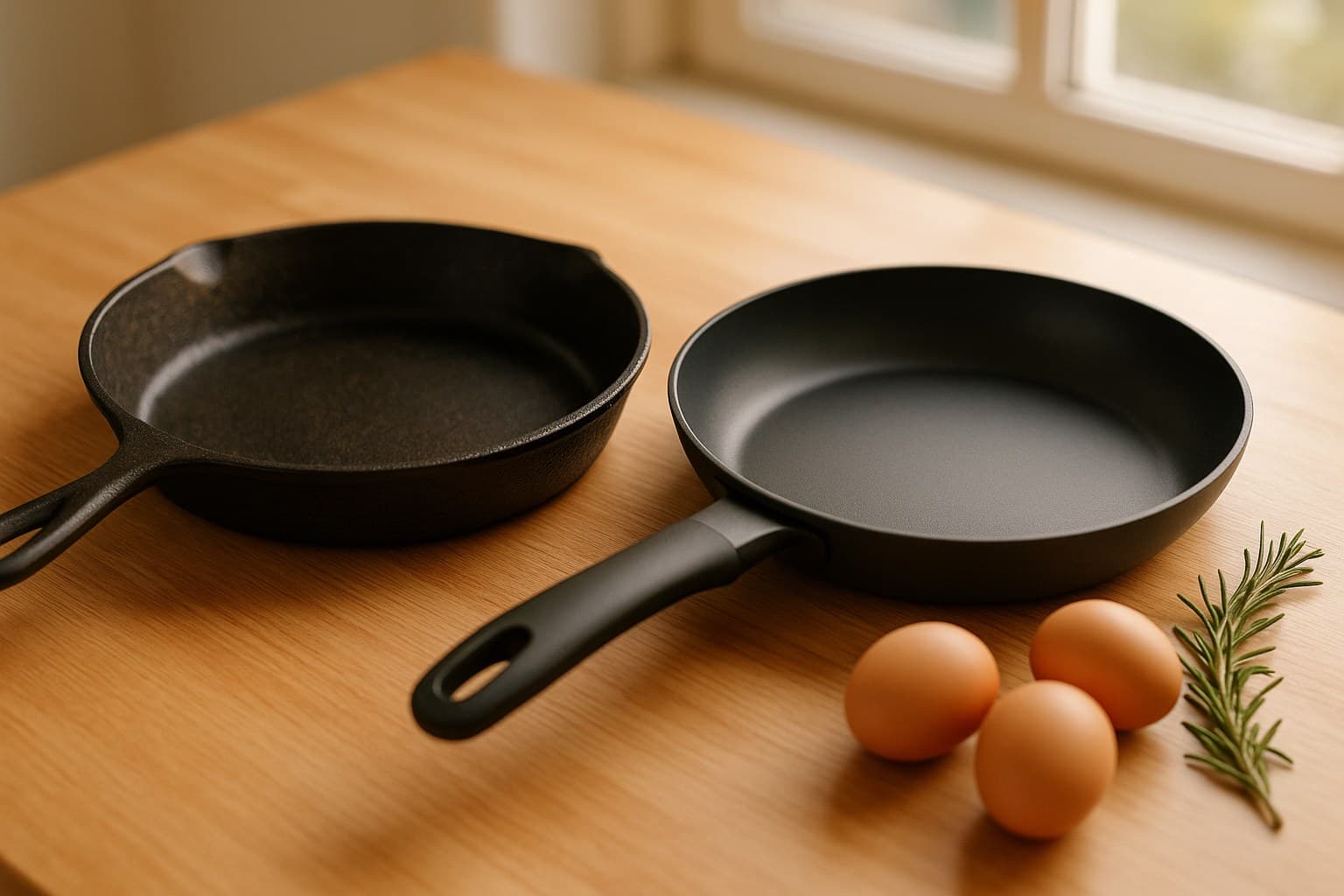
Cast iron and nonstick are not rivals, they are two tools for two jobs. Here is exactly which one to reach for, dish by dish, plus how to keep both pans working for years.
People treat this like a fight. It is not. Cast iron and nonstick do different things well, and once you know which job each one is built for, you stop second-guessing yourself at the stove. Grab the right pan, get the right result. That is the whole trick.
Here is the short version before the detail: cast iron is for heat and browning, nonstick is for delicate and sticky. Below, I go through the real differences and then walk you through which pan wins for the dishes you actually cook, morning to night.
The core difference in one minute
Cast iron is a thick slab of metal. It heats slowly, holds that heat hard, and gives you a deep brown crust because the surface stays hot even when cold food hits it. A nonstick pan is thin, with a coating that food slides right off. It heats fast, cools fast, and is gentle, but that coating starts to break down past roughly 400F (about 200C), so it is not built for ripping-hot cooking.
- Cast iron: high heat, heavy crust, lasts decades, oven-safe, builds a natural slick surface over time.
- Nonstick: low to medium heat only, nothing sticks, easy cleanup, but the coating wears out in a few years and hates metal tools.
Eggs, omelets and pancakes: nonstick
This is the one job nonstick was born for. A soft scramble, a folded omelet, a fried egg with an unbroken yolk, a stack of pancakes that flip clean. You want a gentle, slippery surface and medium-low heat, exactly what nonstick gives you. Cast iron can do eggs once it is well seasoned, but for a beginner it is a gamble and a mess. Use the nonstick and keep your morning calm.
Steak, burgers and chops: cast iron
Nothing beats cast iron for a seared steak. You want the pan smoking hot so the surface browns before the inside overcooks. That deep crust is the Maillard reaction, and it only happens with serious heat that nonstick cannot safely reach. Get the pan ripping hot, pat the steak dry, lay it down, and do not move it for two to three minutes. The same goes for burgers, pork chops, and lamb. Heavy metal, big heat, real crust.
Fish fillets and skin: depends
Delicate white fish like sole or tilapia: nonstick, every time. It is too easy to shred a soft fillet trying to free it from cast iron. But if you want crispy skin on salmon or sea bass, cast iron wins. Get it hot, oil it, lay the fillet skin-side down, press it flat for ten seconds, and leave it alone. The skin releases itself when it is crisp. The rule of thumb: gentle fish goes nonstick, crispy skin goes cast iron.
Stir-fry and roasted veg: cast iron
Charred broccoli, blistered green beans, golden Brussels sprouts, a quick weeknight stir-fry of whatever vegetable is about to go off in your fridge. You want high heat and a bit of char, and cast iron delivers it. Bonus: a cast iron skillet goes straight from the stovetop into a hot oven, so you can sear veg on the burner and roast it through without dirtying a second dish.
Sauces, tomatoes and anything acidic: nonstick
Here is a trap people fall into. Acidic foods like tomato sauce, lemony pan sauces, or a wine reduction can strip the seasoning off cast iron and pick up a faint metallic taste, especially if the pan is newish. For a long-simmered tomato sauce or a quick pan sauce, reach for nonstick or stainless. Keep cast iron for the dry, high-heat jobs and it will thank you.
How to keep both pans working
Cast iron is nearly immortal if you respect it. Wash it with hot water and a brush, dry it on the stove for a minute so no water sits in it, then wipe a thin film of oil over the surface. Skip the long soak and skip the dishwasher. If it ever rusts, scrub it back to bare metal, oil it, bake it, and it is reborn.
Nonstick is the opposite. Treat it gently, accept it is a consumable, and replace it every few years when food starts to grab. Hand wash with a soft sponge, store it without stacking heavy pans on top, and only ever use wood or silicone tools.
- 10 to 12 inch cast iron skillet — Your high-heat workhorse for searing, roasting and charring. One good one lasts a lifetime.
- 10 inch nonstick frying pan — For eggs, delicate fish and anything sticky. Budget for a replacement every few years.
- Silicone or wood spatula — Safe on nonstick coating and gentle on cast iron seasoning.
Own both and you have covered almost everything a home kitchen throws at you. Cast iron for the brown and the char, nonstick for the gentle and the slippery. Once the choice is automatic, cooking gets a lot less stressful.
Tell Pann the one ingredient you want to use up and the pan you've got on the stove, and it builds a real meal around it, then walks you through cooking it step by step.
Frequently asked questions
Should I use cast iron or nonstick for eggs?
Nonstick, every time. A gentle, slippery surface at medium-low heat gives you soft scrambles, folded omelets and unbroken yolks. Cast iron can handle eggs once it is well seasoned, but for a beginner it is a gamble and a mess.
What is the best pan for searing a steak?
Cast iron. It holds heat hard, so the surface browns before the inside overcooks and you get a real crust. Get the pan ripping hot, pat the steak dry, lay it down and leave it alone for two to three minutes.
Can you cook tomato sauce in cast iron?
Better not to. Acidic foods like tomato sauce, lemony pan sauces or a wine reduction can strip the seasoning off cast iron and pick up a faint metallic taste, especially in a newish pan. Use nonstick or stainless instead.
Which pan is best for cooking fish?
It depends on the fish. Delicate white fillets like sole or tilapia go in nonstick, since they shred easily when you try to free them from cast iron. For crispy skin on salmon or sea bass, cast iron wins.
How do you stop a nonstick pan wearing out?
Two things kill it: metal utensils and heat past medium-high. Use wood or silicone tools, hand wash with a soft sponge, and store it without heavy pans stacked on top. Even so, treat it as a consumable and replace it every few years.
How do you look after a cast iron pan?
Wash it with hot water and a brush, dry it on the stove for a minute so no water sits in it, then wipe a thin film of oil over the surface. Skip long soaks and the dishwasher. Rusted pans can be scrubbed, oiled and baked back to life.