
How to Store Vegetables in the Fridge (So They Last 2x Longer)
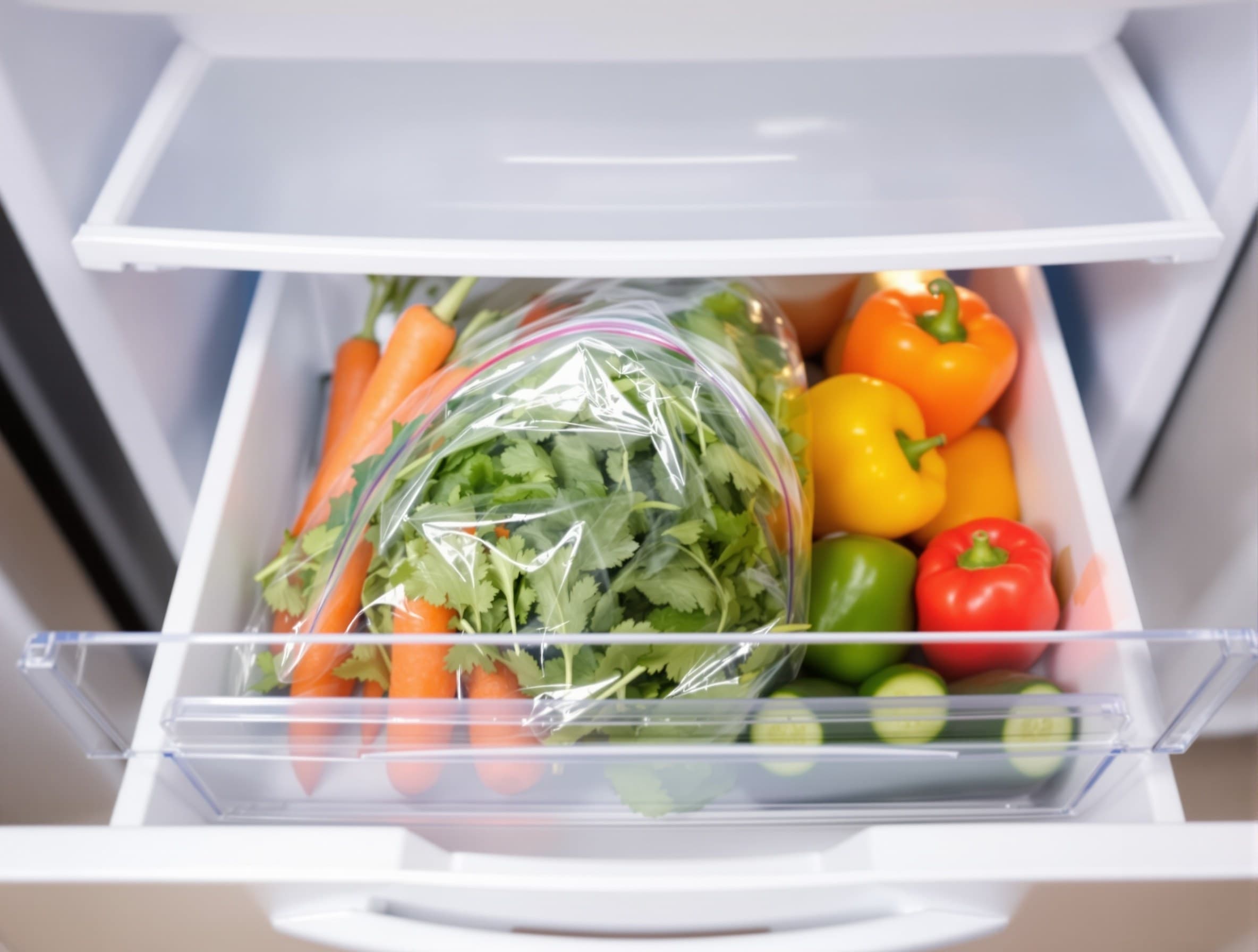
Most vegetables last twice as long with two changes: the right crisper drawer setting and keeping ethylene fruit away from your greens. Here is the whole system in one read.
The best way to store vegetables in the fridge is simpler than the internet makes it: leafy greens and most vegetables go in the high-humidity crisper drawer (vents closed), fruit goes in the low-humidity drawer (vents open), and ethylene-producing fruit like apples and avocados never shares a drawer with anything green. Those two moves alone roughly double the life of most produce.
The reason is a gas you cannot see. Apples, avocados, ripe bananas, tomatoes and pears release ethylene as they ripen. Ethylene tells nearby produce to ripen too, which is why the spinach next to the apples yellows in two days while the same bag alone stays green for a week. Separate the producers from the sensitive and half your wilting problem disappears.
The 2-Minute Crisper Setup
- Set one drawer to high humidity (slider closed). This one is for anything that wilts: lettuce, spinach, herbs, broccoli, carrots, cucumbers, peppers.
- Set the other drawer to low humidity (slider open). This one is for anything that rots when damp: apples, pears, grapes, stone fruit, avocados.
- Line the high-humidity drawer with a clean tea towel or paper towel. It catches condensation, the main cause of slime.
- Keep vegetables in loose, open bags rather than airtight ones. They still need to breathe.
- Do a 30-second sweep once a week: one soft tomato or moldy berry accelerates everything around it.
What Goes Where: The Short Version
- High-humidity drawer: leafy greens, broccoli, cauliflower, carrots, celery, cucumbers, peppers, green beans, fresh herbs
- Low-humidity drawer: apples, pears, grapes, avocados (once ripe), stone fruit
- Fridge shelf, not drawer: mushrooms in a paper bag, corn in its husk, leftovers of any cut vegetable in sealed containers
- Never the fridge: whole tomatoes, potatoes, onions, garlic, winter squash, unripe bananas, basil
Leafy Greens: From 3 Days to 10
- Do not wash greens before storing. Surface water is what turns them to slime.
- Wrap the bunch loosely in a dry paper towel, then put it in an open bag or container.
- Store hardy herbs (parsley, cilantro) like flowers: trimmed stems in a jar of water with a loose bag over the top, in the fridge.
- Basil is the exception. It hates the cold, keep it in water on the counter like a bouquet.
- Revive wilted greens in a bowl of ice water for 10 to 15 minutes. They re-crisp because their cells literally refill with water.
Cut Vegetables and Meal-Prep Storage
- Cut carrots, celery and radishes keep 1 to 2 weeks fully submerged in a container of water in the fridge. Change the water every few days.
- Cut peppers, cucumbers and broccoli go in sealed containers with a paper towel, good for 3 to 5 days.
- Cut onions keep 7 to 10 days sealed, though your fridge will know about it.
- Cut potatoes brown fast, keep them under water and cook within a day.
- Anything cut counts as a leftover: fridge within 2 hours, always.
Should tomatoes go in the fridge?
Whole ripe tomatoes: no, the cold dulls their flavor compounds and makes the texture mealy. The exception is a fully ripe tomato you cannot eat for days, refrigerating it beats binning it, just bring it back to room temperature before eating. Cut tomatoes always go in the fridge, sealed, and get eaten within 2 days.
Why do my vegetables go bad so fast?
Nine times out of ten it is one of three things: greens stored wet, ethylene fruit sharing space with vegetables, or an overpacked fridge with no air circulation. Fix those and most produce hits its full natural lifespan, carrots for weeks, peppers for two, greens for one or more.
The payoff for all this is bigger than crisp lettuce: the average household throws away a meaningful share of the produce it buys, and storage is the easiest lever to pull. When something is on its last day anyway, cook it on purpose, our guide to what to do with expiring produce exists for exactly that moment, and how to stop wasting food covers the whole system. Frozen vegetables are the zero-pressure backup, see what to cook with frozen vegetables.
Tell Pann the one thing you need to use up and it builds a meal around it, sized to your goal, then cooks it with you step by step.