
10 Cooking Skills Everyone Should Know (Ranked by Payoff)
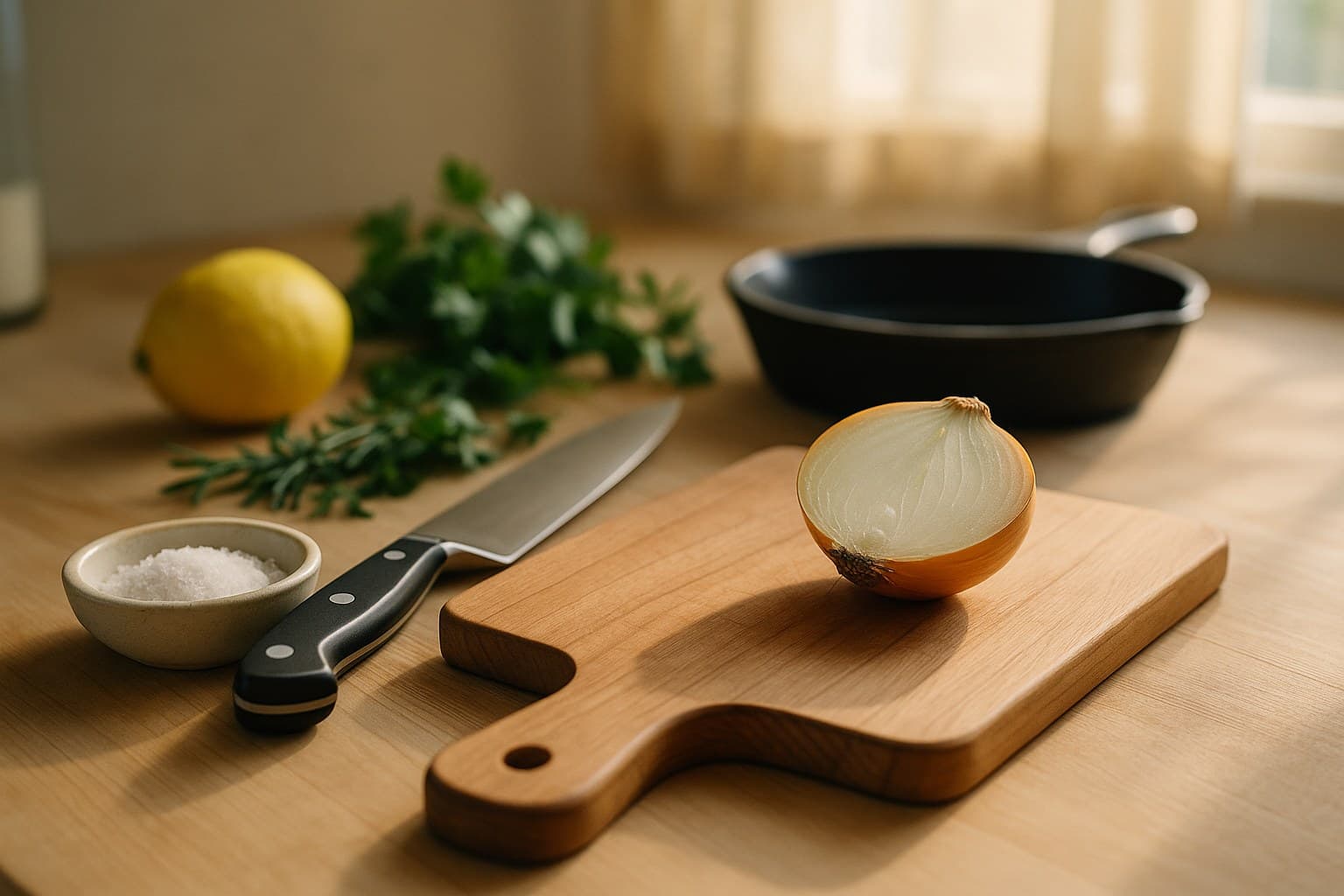
Most home cooking gets better not from new recipes but from a handful of basic skills. Here are the ten that pay off most, ranked from biggest impact down, with concrete ways to practice each one.
You do not need 200 recipes to cook well. You need maybe ten skills that show up in almost everything you make. Get those solid and a plain weeknight plate of chicken and rice starts tasting like someone who knows what they are doing made it.
Here are the ten skills that matter most, ranked by payoff. The first few will change more meals than the last few, so if you only practice three, practice the top three.
1. Seasoning properly (the biggest one)
More flat, boring food comes from under-seasoning than from any other mistake. Salt is not a finishing sprinkle. It is the thing that makes food taste like itself.
Season in layers. A pinch when you start the onions, a pinch on the meat before it hits the pan, a taste and adjust near the end. Salt the pasta water until it tastes like a mild broth, roughly a tablespoon per large pot. And taste constantly. The single habit that separates good home cooks from frustrated ones is tasting the food and asking does this need salt, acid, or fat.
2. Basic knife skills
You need exactly one good move: a steady rocking chop with the knife tip staying on the board and your guiding hand curled into a claw. That is it. Speed comes later and does not matter much anyway.
- Keep the knife sharp. A dull knife slips and is the more dangerous one. A cheap honing steel or a pull-through sharpener once a week is plenty.
- Cut things to a similar size so they cook evenly. Uneven onion equals some raw, some burnt.
- Curl your fingertips under on the hand holding the food. Knuckles guide the blade, tips stay safe.
3. Controlling heat
Most home cooks run the burner too high and too constant. Learn what the settings actually do. High heat sears and browns. Medium cooks things through without scorching. Low simmers and softens.
A simple test for a hot pan: flick in a drop of water. If it skitters and dances, the pan is ready. If it just sits and steams, wait. Preheating the pan properly is why restaurant chicken gets golden and home chicken sometimes goes grey.
4. Building a flavor base
Half the world's good cooking starts the same way: aromatics softened in fat. Onion, garlic, and maybe carrot or celery, cooked gently in oil or butter until soft and fragrant before anything else goes in. This takes five to eight minutes and it is the foundation under most soups, sauces, stews, and skillet dinners.
Do not rush it and do not burn the garlic, which turns bitter in seconds. Add garlic a minute or two after the onion, not at the same time.
5. Browning (the Maillard reaction, minus the chemistry)
Brown food tastes better than pale food. That golden crust on a seared steak, roasted vegetables, or a pan-fried piece of tofu is hundreds of new flavor compounds you cannot get any other way.
- Pat food dry first. Wet surfaces steam instead of brown.
- Do not crowd the pan. Crowded food releases steam and goes soft. Cook in batches if you have to.
- Leave it alone. Let it sit and develop a crust before you flip. If it sticks, it is usually not ready to turn yet.
6. Turning the pan into a sauce
After you sear meat, those brown bits stuck to the pan are pure flavor. Pour in a splash of liquid, stock, wine, even water, and scrape them up with a wooden spoon while it bubbles. That is deglazing, and it turns a dry piece of chicken into chicken with a sauce in about two minutes. Swirl in a knob of butter at the end and you look like a show-off.
7. Cooking eggs well
Eggs are cheap, fast, and brutally honest about your heat control. Learning to cook them is really learning patience with a burner.
For soft, creamy scrambled eggs, use lower heat than you think and pull them off while they still look slightly underdone, because they keep cooking. For a fried egg with a runny yolk and set white, medium-low and a lid for the last minute. Master eggs and breakfast stops being a frozen-waffle situation.
8. Cooking rice, pasta, and grains right
These are the backbone of fast meals, so getting them reliable matters. Salt the water. For pasta, taste a piece two minutes before the package says to drain, because you want it with a little bite. For rice, the ratio and a tight lid matter more than fussing: leave it covered and do not stir it to death.
9. Knowing when things are done
Cut times in recipes are estimates. Your pan, your stove, and the thickness of your food all change them. Learn the signs instead. Chicken is done when the juices run clear and it feels firm, not squishy. Vegetables are done when a knife slides in with light resistance. A cheap instant-read thermometer removes all guesswork for meat and is worth the small spend.
10. Tasting and adjusting as you go
This is less a technique than a habit, and it ties all the others together. Keep a spoon nearby. Taste before you serve, every time. Ask what one thing would make this better, then add it: a pinch of salt, a squeeze of acid, a crack of pepper, a handful of fresh herbs. Cooking is a series of small corrections, not a single perfect leap.
None of these need a class or a fancy kitchen. They need a few real meals where you pay attention. Cook the same simple thing a handful of times, watch what changes, and these skills stack up faster than you would guess across breakfast, lunch, and dinner alike.
Tell Pann the one thing you have got and it builds a real meal around it, then walks you through cooking it step by step. That guided practice is how these skills actually stick.