
How to Cook Pasta Properly: The Mistakes to Stop Making
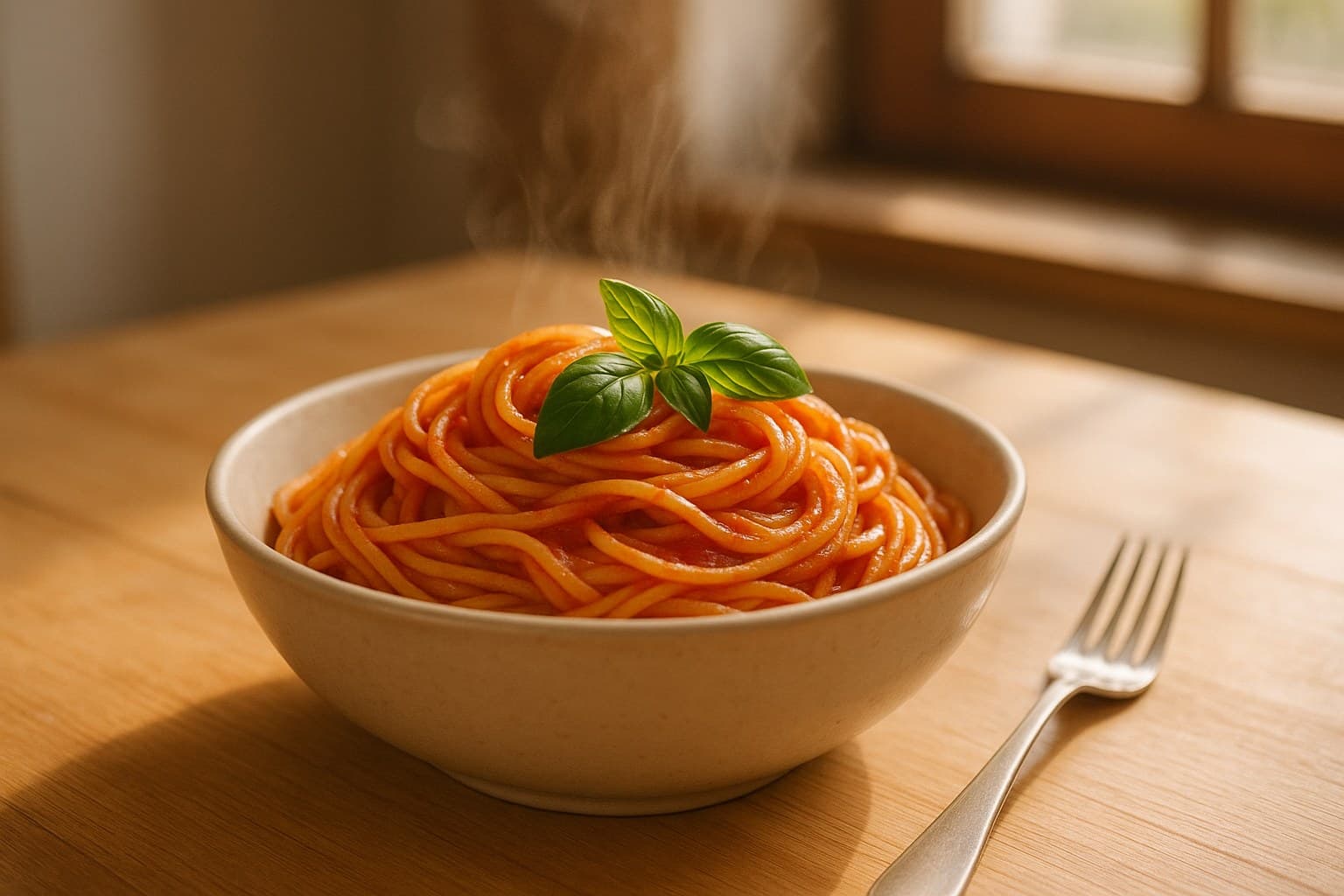
Most home pasta goes wrong in the same handful of ways: too little salt, too little water, a sauce that never clings. Here are the mistakes to stop making and exactly what to do instead.
Pasta looks foolproof. Boil water, add noodles, drain, done. And yet most of the pasta cooked at home comes out a little sad: bland, sticky, swimming in a sauce that slides right off. The good news is that the fixes are tiny. None of them cost money and none of them take extra time. They are just small habits that nobody ever told you.
Here are the mistakes that quietly ruin pasta, and the simple thing to do instead each time.
1. Not using enough water
A cramped pot is the number one cause of gummy, clumped pasta. When there is too little water, the temperature crashes the moment the noodles go in, and the starch they shed has nowhere to go. So it coats the pasta and glues it together.
Use a big pot and at least 4 liters of water for a standard 500 gram box. The pasta should swim, not sit. More water means the boil recovers fast and the starch stays diluted.
2. Under-salting the water
This is the single biggest flavor mistake. Pasta is seasoned from the inside while it cooks, and there is no fixing bland noodles later. People hear "salt like the sea" and panic. Here is a real number instead: about 10 grams of salt per liter of water. For 4 liters, that is roughly 40 grams, which is around 3 tablespoons of table salt.
It tastes aggressively salty in the pot. It should. Most of that salt goes down the drain. What stays behind is properly seasoned pasta, and that changes everything.
3. Adding oil to the water
Skip it. Oil in the pasta water does not stop sticking, it just floats on top and coats the noodles when you drain, which makes sauce slide off later. The real anti-stick move is enough water and a stir in the first minute, when the noodles are softening and most likely to clump.
Give the pot one good stir right after the pasta goes in, then another a minute later. After that you can mostly leave it alone.
4. Overcooking past al dente
Al dente means "to the tooth": cooked through but with a slight firmness left in the center. It is not undercooked, it just has structure. Mushy pasta has lost that, and it also turns gluey because it has dumped more starch into the water.
Set a timer for 2 minutes less than the box says, then taste a piece. You want a tiny bit of resistance and no chalky white core. Remember the pasta keeps cooking in the hot sauce after you drain, so pulling it early is the plan, not a mistake.
- Start tasting 2 minutes before the package time.
- Bite through one piece. Look at the cross-section.
- A pinhead of firmness in the center means done. Pure softness means you waited too long.
5. Pouring all the pasta water down the drain
That cloudy water is the best free tool in pasta cooking. It is full of dissolved starch, and starch is what makes a sauce thicken, turn glossy, and actually cling to the noodles instead of pooling at the bottom of the bowl.
Before you drain, scoop out a mug of the water. Keep about 250 milliliters. You will not always use all of it, but you will be glad it is there.
6. Rinsing the pasta after draining
Do not rinse hot pasta you are about to sauce. Rinsing washes off the starch you just worked to keep, and it cools the noodles so the sauce stops absorbing. The only time to rinse is for a cold pasta salad, where you actually want the cooking to stop.
Drain it, leave it slightly wet, and get it into the sauce fast while it is still steaming.
7. Treating sauce as a topping, not a finish
This is the move that separates home pasta from the version you get at a good restaurant. They do not drain pasta and ladle sauce on top. They finish the pasta in the pan with the sauce, so the two cook together for the last minute.
Here is the whole technique:
- Have your sauce warm in a wide pan before the pasta is done.
- Drain the pasta a minute early and tip it straight into the sauce.
- Add a splash of the reserved pasta water, maybe 60 milliliters to start.
- Turn the heat to medium and toss or stir hard for about a minute.
- The water and starch emulsify the sauce into something glossy that grips every noodle. Add more pasta water if it looks tight, or cook it a few more seconds if it looks loose.
For something like a simple garlic and oil pasta, this step is the entire dish. It turns oil and water into a creamy-looking sauce with no cream at all.
Put all seven together and you get pasta that is seasoned through, springy, and coated in a sauce that holds on. None of it is fussy. It is just the difference between boiling noodles and cooking pasta.
Tell Pann the one or two things you have, like "spaghetti and a tin of tomatoes," and it builds a real meal around them, sized to you, then walks you through the cooking step by step, pasta-water trick included.