
How Long Does Leftover Pasta Last? Real Storage Times
Plain cooked pasta lasts 3 to 5 days in the fridge, pasta in tomato or oil sauce 3 to 4 days, and anything with cream, egg or seafood only 1 to 2 days. Frozen cooked pasta holds quality about 2 months. Those windows assume it was sealed and chilled within 2 hours.
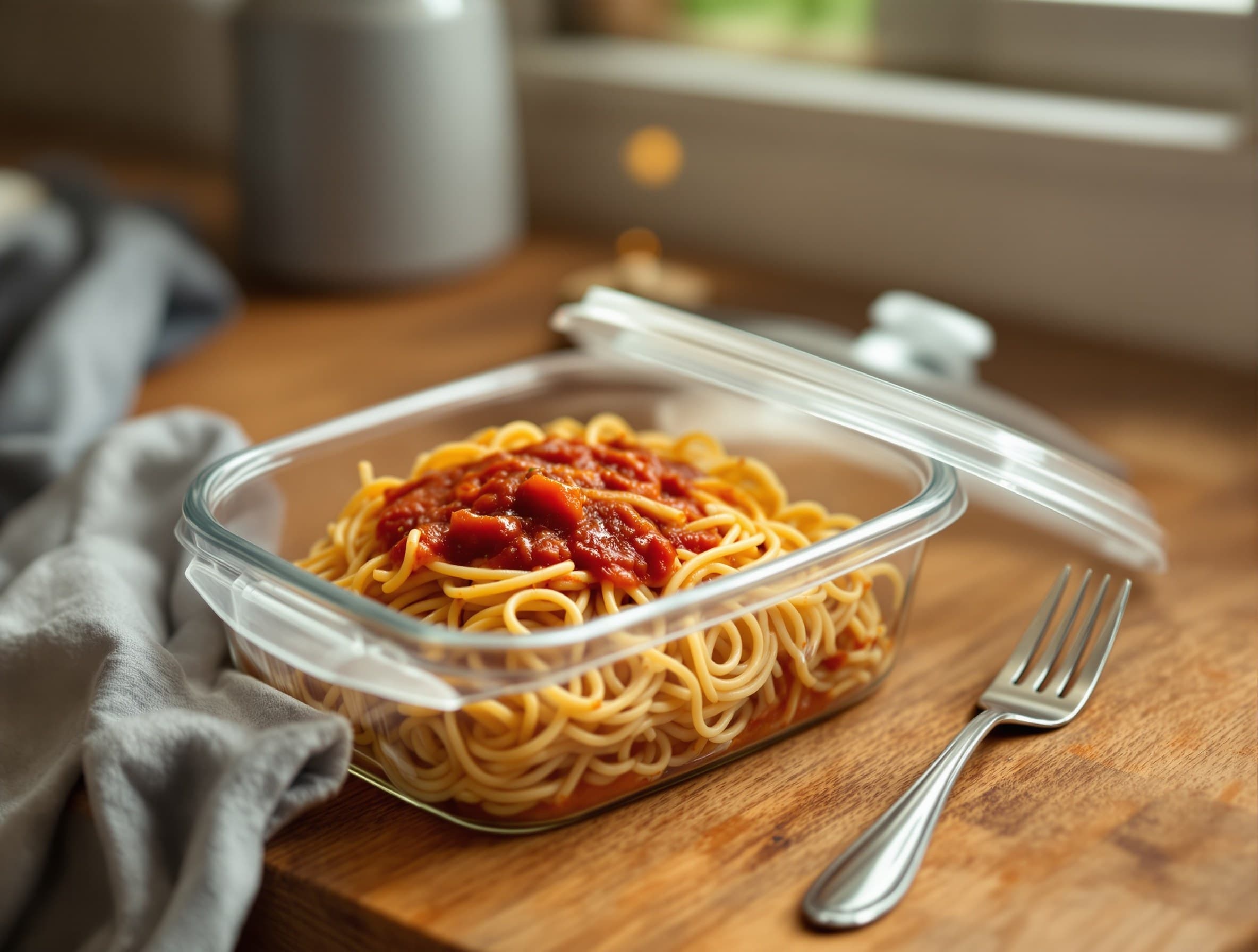
Cooked pasta keeps 3 to 5 days in the fridge if you cool and store it right. Here is exactly how long each kind lasts, how to tell when it is done, and how to make day-three pasta taste new.
The short answer: plain cooked pasta lasts 3 to 5 days in the fridge, pasta mixed with sauce lasts 3 to 4 days, and anything with cream, seafood or egg should be eaten within 2 days. In the freezer, cooked pasta holds quality for about 2 months. Those windows assume one thing: the pasta went into the fridge within 2 hours of cooking, in a sealed container, with your fridge at 4 degrees Celsius or colder.
That 2-hour rule is not fridge folklore. Cooked pasta and rice can carry Bacillus cereus, a bacterium whose spores survive boiling and multiply fast at room temperature. The longer the pot sits out on the stove, the shorter its fridge life gets. Cool it fast and pasta is one of the most forgiving leftovers there is.
The Real Storage Times, By Type
- Plain cooked pasta (no sauce): 3 to 5 days in the fridge
- Pasta in tomato or oil-based sauce: 3 to 4 days
- Pasta in cream sauce, carbonara, or anything with egg: 1 to 2 days
- Pasta with seafood: 1 to 2 days, and trust your nose over the calendar
- Pasta salad with mayo dressing: 2 to 3 days
- Frozen cooked pasta: about 2 months at best quality, safe beyond that but increasingly mushy
How to Store It So It Actually Lasts
- Cool it fast: spread hot pasta on a plate or rinse briefly under cold water so it stops steaming before it goes in a container.
- Toss plain pasta with a teaspoon of olive oil so the strands do not weld into a brick.
- Use a sealed container, not the pot with a lid balanced on top. Less air means slower drying and fewer fridge smells.
- Store sauce and pasta separately when you can. Both last longer, and the pasta will not bloat.
- Label the container with the day. Day-count guessing is how the 6-day carbonara gets eaten.
How to Tell Leftover Pasta Has Turned
Do not taste-test your way to an answer. Off pasta shows itself first: a sour or yeasty smell, a slimy or sticky film on the surface, any fuzzy spots (white, green or black), or a container lid that hisses when opened. Any one of those means the whole container goes, including the sauce it touched.
How to Make Day-Three Pasta Taste Fresh
- Skip the microwave-until-rubber approach. Heat a pan on medium with a little olive oil or butter.
- Add the pasta with a splash of water (2 to 3 tablespoons per bowl) to re-steam the inside while the outside crisps.
- Give it 3 to 4 minutes, tossing once. Saucy pasta wants a lid for the first 2 minutes.
- Finish with something fresh: grated cheese, black pepper, a handful of spinach, or a fried egg on top.
- For a full reinvention, press it flat and fry it into a crispy pasta pancake. Day-old spaghetti was born for this.
Can you freeze cooked pasta?
Yes, and it works best when the pasta was cooked just shy of al dente. Freeze it in portion-sized bags with the air pressed out, ideally tossed in a little oil. Reheat straight from frozen in simmering sauce or boiling water for about 60 seconds. Cream-sauce dishes freeze poorly, the sauce splits when thawed.
Is 4-day-old pasta safe to eat?
Plain or tomato-sauce pasta that was cooled fast and kept sealed at 4 degrees is fine on day four. Cream, egg or seafood pasta is past its window by then. If you cannot remember when you cooked it, that is your answer. If it passes the look and smell check, reheat it until steaming hot all the way through, about 74 degrees Celsius.
Leftover pasta is the easiest cooking win there is: dinner already exists, it just needs 4 minutes in a pan. If you want ideas beyond reheating, our guide to cooking pasta properly covers the base technique, and pasta and eggs turns leftovers into a genuinely new meal. Wasting less starts with knowing what is still good, the rest is in how to stop wasting food.
Tell Pann you have leftover pasta and it builds a real meal around it, sized to your goal, then walks you through it step by step.
Frequently asked questions
Can you eat 4-day-old pasta?
Plain or tomato-sauce pasta that was cooled fast and kept sealed at 4 degrees Celsius is fine on day four. Cream, egg or seafood pasta is past its window by then. If you cannot remember when you cooked it, that is your answer.
How can you tell if leftover pasta has gone bad?
Do not taste-test it. Off pasta gives itself away with a sour or yeasty smell, a slimy or sticky film, fuzzy white, green or black spots, or a lid that hisses when opened. Any one of those and the whole container goes, sauce included.
How do you store cooked pasta so it actually lasts?
Cool it fast so it stops steaming, toss plain pasta with a teaspoon of olive oil, then seal it in a proper container rather than the pot. Keep sauce separate where you can, label the container with the day, and get it in the fridge within 2 hours.
Can you freeze cooked pasta?
Yes, and it works best when the pasta was cooked just shy of al dente. Freeze portion-sized bags with the air pressed out, ideally tossed in a little oil. Reheat straight from frozen in simmering sauce or boiling water for about 60 seconds. Cream sauces split when thawed.
What is the best way to reheat leftover pasta?
Skip the microwave. Heat a pan on medium with a little olive oil or butter, add the pasta with 2 to 3 tablespoons of water per bowl, and give it 3 to 4 minutes, tossing once. Saucy pasta wants a lid for the first 2 minutes.
Why does pasta have to go in the fridge within 2 hours?
Cooked pasta can carry Bacillus cereus, whose spores survive boiling and multiply quickly between 5 and 60 degrees Celsius. The longer the pot sits on the stove, the shorter the fridge life. If pasta sat out overnight, bin it, however it smells.