
How to Actually Caramelize Onions (Not Just Brown Them)
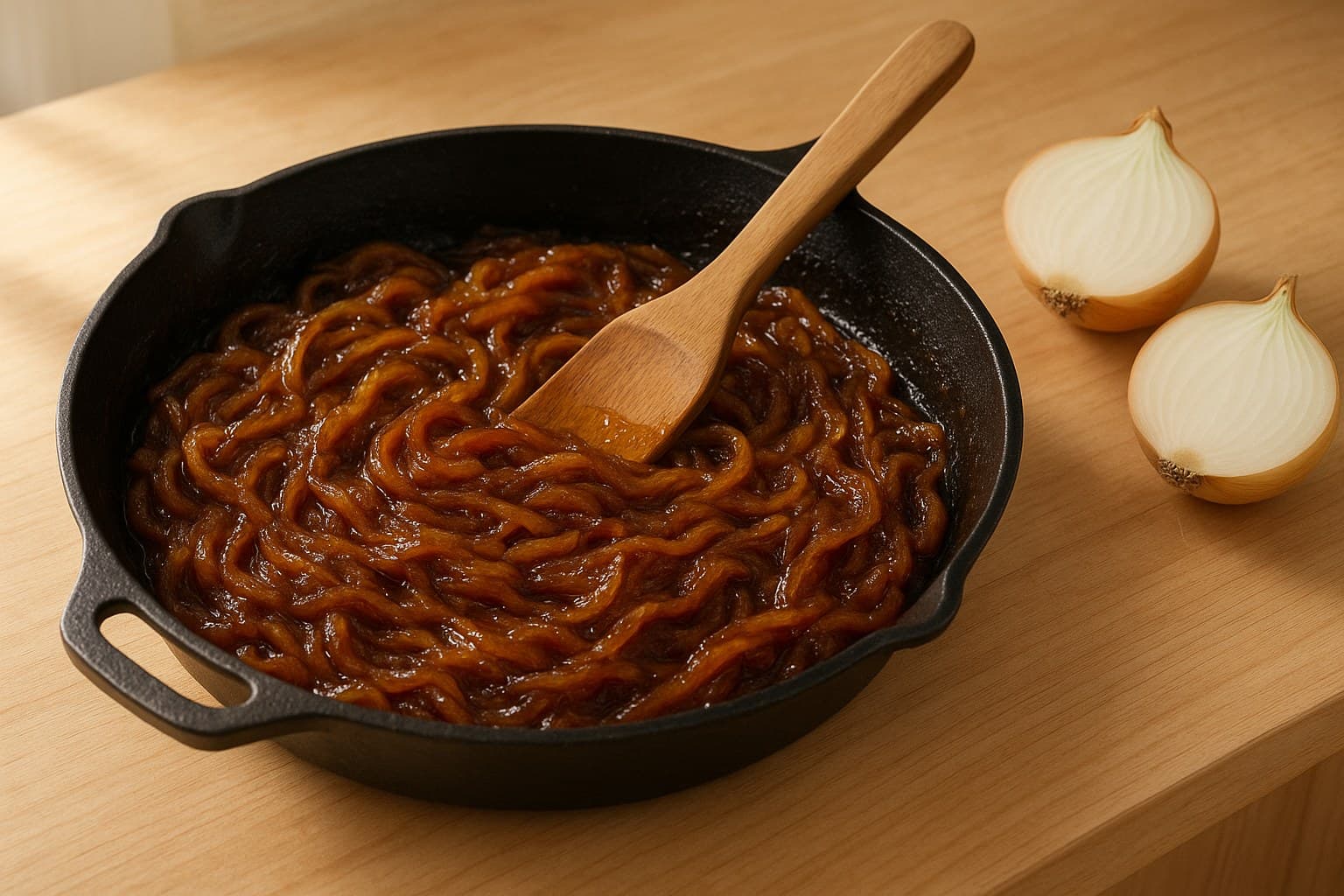
Real caramelized onions are deep brown, soft, and jammy-sweet, and they take time. Here is the low-and-slow method, why 10-minute versions are lying, and how to do it right.
Most recipes that promise caramelized onions in 10 minutes are selling you browned onions. Those are fine, but they are not the deep, jammy, almost-sweet onions that melt into a burger, a soup, or a pasta. Real caramelization is slow. It is the sugars in the onion breaking down and browning over time, and there is no shortcut that gets you the same flavor. Give it 40 to 50 minutes and you will taste the difference instantly.
Here is how to do it properly, and the small moves that keep it from going wrong.
1. Use a wide, heavy pan
You want a wide skillet, stainless steel or cast iron, at least 10 to 12 inches. Width matters because onions release a lot of water, and a crowded pan traps that steam so they boil instead of brown. A heavy base also holds steady, even heat, which is the whole game here. A thin nonstick pan on high heat will scorch the edges before the centers soften.
2. Slice them evenly, with the grain
Cut the onions root to tip, following the lines of the onion rather than across them. Slices cut this way hold their shape better and turn jammy instead of dissolving into mush. Aim for an even quarter-inch thickness so every piece cooks at the same rate. Two or three large onions cook down to a surprisingly small pile, so do more than you think you need.
- Yellow onions are the classic choice, sweet and balanced.
- Sweet onions like Vidalia caramelize a little faster.
- Slice root to tip, not across, for slices that hold together.
3. Start with butter, oil, or both
Warm a generous tablespoon or two of fat over medium heat. Butter gives the richest flavor but can burn, so a mix of butter and a neutral oil gives you flavor plus a higher smoke point. Add the onions, toss to coat, and sprinkle a pinch of salt. The salt pulls water out of the onions and speeds the early softening stage.
4. Drop the heat and let them go
This is the part people rush. After the onions soften and turn translucent, around 8 to 10 minutes, turn the heat down to medium-low. Now they need to sit and slowly brown. Stir every few minutes, not constantly, so they have time to make contact with the pan and color. You are looking for a steady, gentle sizzle, not a fast fry. If they are browning faster than the centers are softening, your heat is too high.
- Minutes 0 to 10: medium heat, onions soften and go translucent.
- Minutes 10 to 30: medium-low, they turn light gold and shrink.
- Minutes 30 to 50: deep amber and jammy, stir a little more often now.
5. Deglaze the brown bits
As the onions cook, a brown film builds on the bottom of the pan. That fond is pure flavor. Every so often, when it starts to look dark, add a splash of water, broth, or a dry wine and scrape it up with your spatula. The liquid lifts the stuck flavor back into the onions and stops the pan from burning. A couple of tablespoons at a time is plenty. This deglaze trick is what separates rich, even caramelized onions from a scorched mess.
6. Know when they are actually done
Truly caramelized onions are a deep, even brown, soft enough to smear, and noticeably sweet. They will have shrunk to maybe a quarter of their starting volume. If they are golden and still a little firm, they are browned, not caramelized, so keep going. The color tells you most of what you need to know, but taste one. When it is sweet with no sharp raw bite, you are there. Total time is usually 40 to 50 minutes, sometimes more for a big batch.
7. Where to put them
Once you have a jar of these, they upgrade almost anything. Pile them on burgers and grilled cheese, fold them into a frittata or scrambled eggs, stir them through pasta with a little of their fat, or use them as the base of French onion soup. They turn a plain meal into something that tastes like it took effort, because it did, just not from you in the moment.
- Wide heavy skillet — Gives the onions room to release steam and lets the heavy base hold steady, even heat so they brown instead of boil.
- Wooden or silicone spatula — Scrapes up the flavorful brown fond during deglazing without scratching the pan.
Tell Pann the one thing you want to use up and it builds a real meal around it, sized to you, then cooks it with you step by step. From a single onion to a full plate, any meal of the day.