
How to Cook Rice Perfectly Every Time (No Cooker)
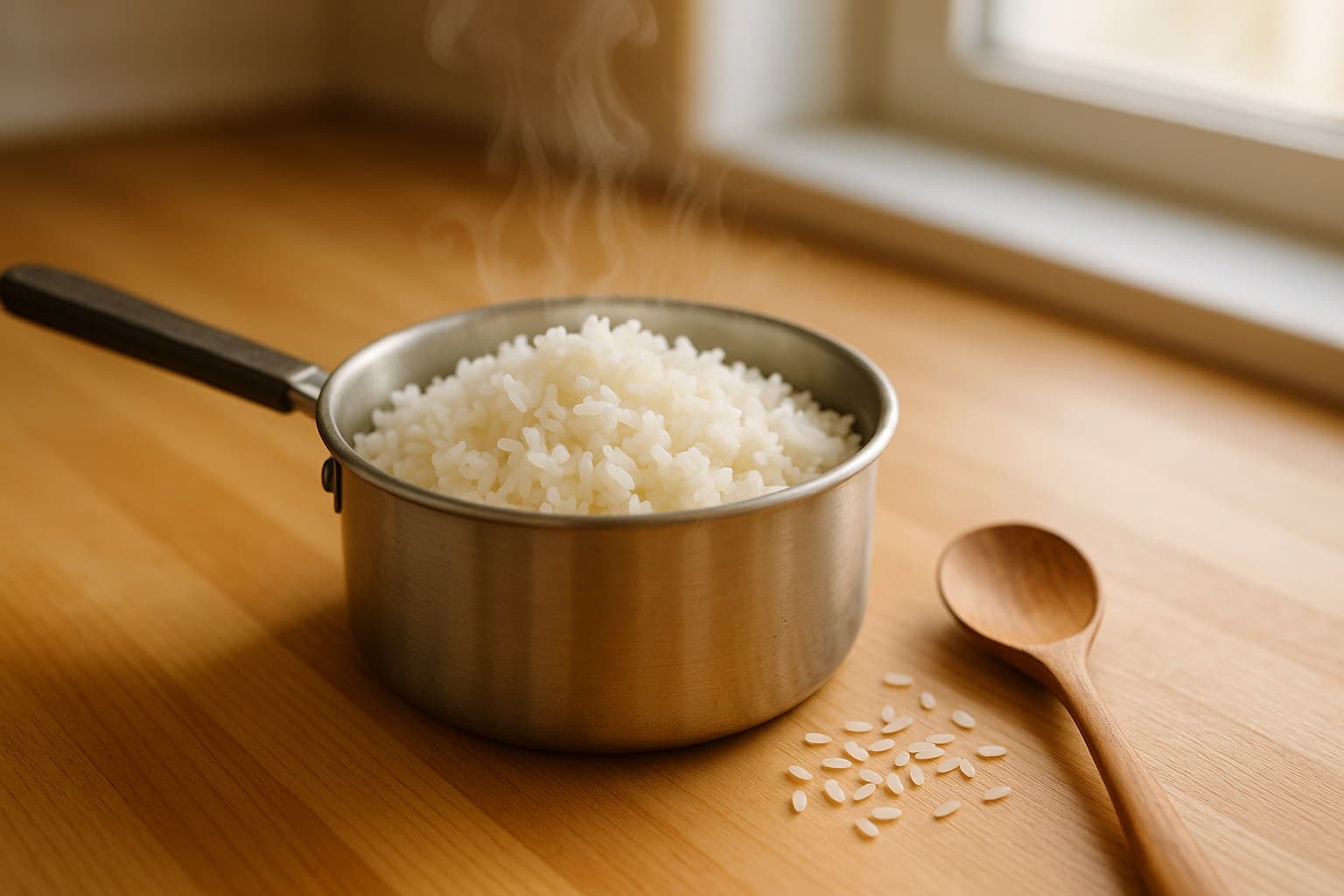
Skip the rice cooker. With one pot, the right water ratio, and a five-minute rest off the heat, you can cook fluffy, separate rice on the stove every single time.
You do not need a rice cooker to make good rice. You need a pot with a tight lid, the right amount of water, and the patience to leave it alone. Most rice fails for boring reasons: too much water, the lid lifted too early, or no rest at the end. Fix those and the stove gives you fluffy, separate grains every time.
Here is the method, plus the small things that actually matter. Works for white long-grain rice like basmati and jasmine. Brown rice and short-grain need tweaks, and I cover those near the end.
1. Get the water ratio right
The single biggest lever is water. For white long-grain rice, use 1.5 cups of water per 1 cup of rice. Not 2 cups. The old 2-to-1 rule makes mushy, gluey rice for most modern long-grain. If you like it a touch softer, go 1.75. Measure with the same cup for both so the ratio holds.
- White long-grain (basmati, jasmine): 1.5 cups water to 1 cup rice
- Short-grain or sushi rice: 1.25 cups water to 1 cup rice
- Brown rice: 2.25 cups water to 1 cup rice, longer cook
2. Rinse until the water runs clear
Put the rice in a bowl or fine strainer and rinse under cold water, swirling with your hand. The first runoff looks milky. That cloud is loose surface starch, and it is exactly what glues grains together. Rinse three or four times until the water is nearly clear, maybe 30 seconds of work. This one step is the difference between separate grains and a sticky clump.
3. Boil, then drop to the lowest simmer
Add the drained rice, the measured water, and a good pinch of salt to a saucepan. A 2-quart pot suits 1 to 2 cups of rice. Bring it to a boil uncovered over medium-high heat. The moment it boils, stir once, cover with a tight lid, and turn the heat to the lowest setting your stove has. You want a bare simmer, not a rolling boil.
If your lid does not seal well, lay a clean kitchen towel under it to trap steam, with the corners folded up away from the flame. Trapped steam is what cooks the top layer of rice.
4. Do not lift the lid
This is where most people lose it. Set a timer for 12 minutes for white rice and walk away. Every time you lift the lid you let steam escape and the rice cooks unevenly. No stirring, no peeking. The pot is doing slow steam-cooking, and it needs the seal to stay shut.
- White long-grain: 12 minutes on the lowest simmer
- Basmati (soaked): 10 to 11 minutes
- Brown rice: 40 to 45 minutes, check water near the end
5. Rest off the heat for 5 minutes
When the timer goes off, turn off the heat and leave the lid on. Let it sit 5 to 10 minutes. The rice is still steaming inside, and this rest lets the moisture spread evenly from the wet bottom to the drier top. Skip it and the bottom layer is soggy while the top is firm. This is a free upgrade and it costs you nothing but a few minutes.
6. Fluff with a fork, not a spoon
Take the lid off and run a fork gently through the rice, lifting and separating rather than stirring. A spoon smashes the grains and brings out starch, which makes it gummy. A fork keeps the grains whole and light. Now it should look fluffy, with each grain distinct. That is the finish line.
7. Fix the three things that go wrong
Even with the method down, rice misbehaves. Here is the quick diagnosis for the usual three.
- Mushy rice: too much water or the heat was too high. Next time cut water to 1.25 and use a lower simmer. To rescue a finished batch, spread it on a tray and let it dry out for a few minutes.
- Crunchy or undercooked centers: it ran out of water or steam too soon. Add 2 tablespoons of hot water, cover, and give it 3 to 5 more minutes on low.
- Burnt bottom: heat too high. Lower the flame next time. The good news is a little browned bottom layer is delicious, so just spoon from the top and leave the crust.
- Heavy saucepan with a tight lid — A thick base spreads heat evenly so the bottom does not scorch, and a sealing lid traps the steam that cooks the top layer.
- Fine-mesh strainer — Makes rinsing fast and keeps grains from washing down the drain, the key to separate, non-sticky rice.
- Fork — Fluffs and separates grains at the end without crushing them into starchy paste.
Once you have done this a few times you will stop measuring nervously. You will eyeball the water, hear the simmer settle, and trust the rest. Rice stops being a gamble and becomes the easy, reliable base under everything else you cook.
Tell Pann the one or two things you have on hand and it builds a real meal around them, sized to you, then walks you through cooking it step by step. No 20-recipe scroll, just dinner, or lunch, or whatever is next.