
How to Stop Overcooking Chicken Breast (5 Fixes)
Dry chicken breast comes down to five fixable mistakes. Pound or slice the breast to an even thickness, cook on medium rather than blazing high, use an instant-read thermometer and pull it at 160F so carryover finishes the job, rest it 5 minutes, and salt-brine for 15 minutes when you have time.
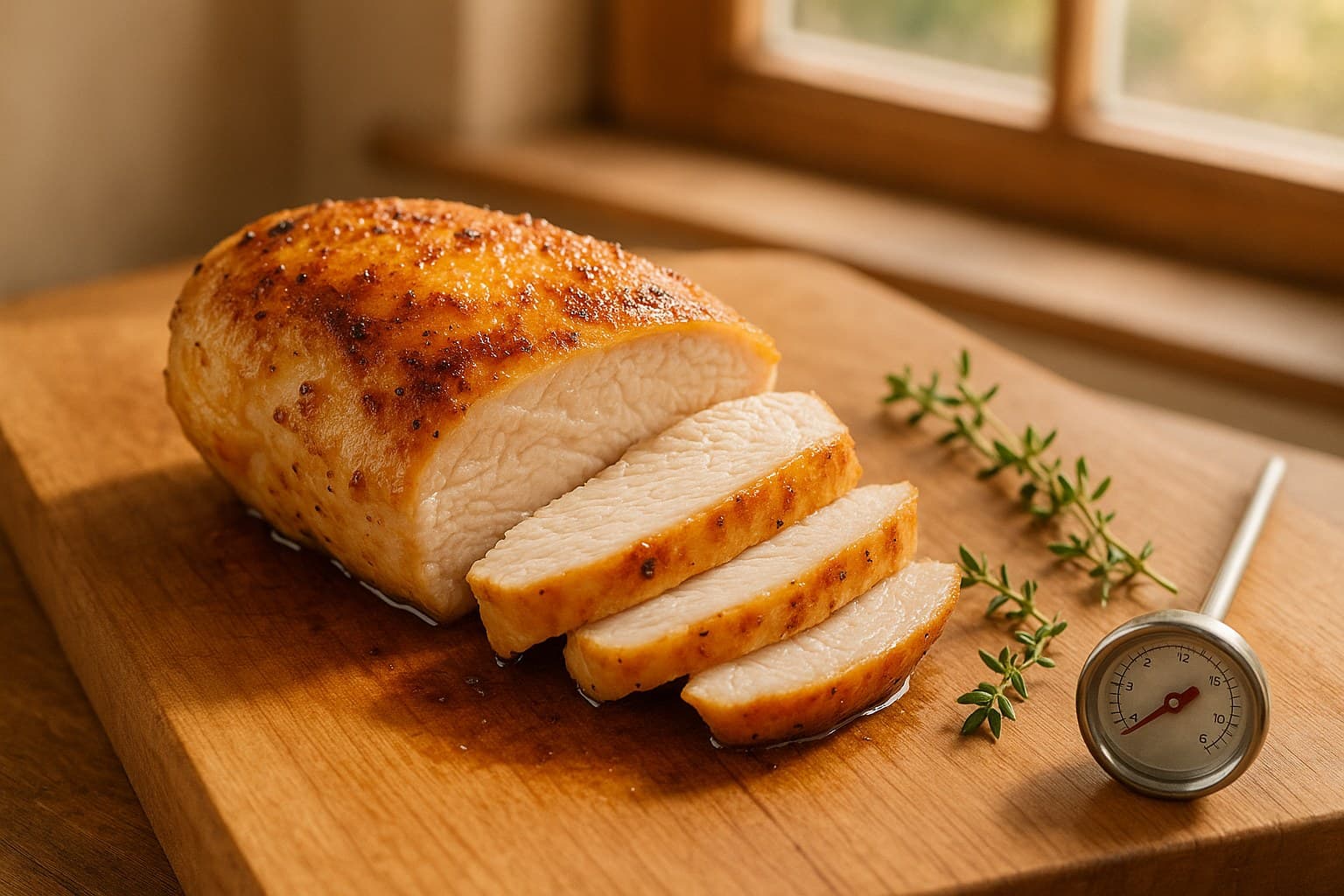
Dry chicken breast is almost always one of five mistakes. Even thickness, a thermometer, a short rest, a quick brine, and pulling it early fix the problem for good.
Chicken breast is lean, which means it goes from juicy to dry in a narrow window. Miss it by 90 seconds and you get the cardboard texture everyone complains about. The good news: dry chicken is almost never bad luck. It is one of five fixable mistakes. Nail these and you will pull tender, juicy breast off the heat every time.
Keep the meat temperature chart open while you cook, and the chicken cooking time calculator gives the time by thickness for breast, thighs and a whole bird.
1. Make it an even thickness
A raw chicken breast is fat at one end and thin at the other. Cook it whole and the thin tip is dry and overcooked before the thick end is even done. The fix is to make it the same thickness all the way across so it cooks evenly.
- Lay the breast between two sheets of parchment or in a freezer bag.
- Pound the thick end with a flat meat mallet or the bottom of a heavy pan until it matches the thin end, around three-quarters of an inch.
- Or slice the breast in half horizontally into two thin cutlets, which also cuts cook time.
Even cutlets cook in about 3 to 4 minutes a side and finish at the same moment. This alone fixes half of all dry chicken.
2. Use a thermometer, not a guess
Cutting into chicken to check if it is done is how you let all the juice run out. An instant-read thermometer is the most reliable upgrade in any kitchen. Chicken breast is safe and still juicy at 165F in the thickest part. Past 170F it starts drying fast, and by 180F it is gone.
3. Cook on medium, not blazing high
High heat sears the outside fast but the inside is still raw, so you keep cooking and the surface turns to leather. Medium heat in a stainless or cast iron pan gives you a golden crust and a cooked center at roughly the same time. Get the pan hot, add a thin film of oil, lay the chicken down, and leave it alone so a real crust forms before you flip. Moving it around stops the browning and adds nothing.
- Heat the pan over medium for a minute or two, then add oil.
- Add the chicken and do not touch it for 3 to 4 minutes.
- Flip once, cook another 3 to 4 minutes, and check the temperature.
4. Let it rest before you cut
When chicken cooks, the juices push toward the center. Slice it straight off the heat and that juice floods your board instead of staying in the meat. Rest the cooked breast on a plate or board for 5 minutes, loosely tented with foil. The juices settle back through the meat and stay there when you cut. Five minutes of doing nothing buys you a noticeably juicier result, and it is the step people skip most.
5. Give it a quick salt brine
If you have 15 minutes, a brine is a cheat code. Salt helps the muscle hold onto water, so the meat stays moist even if you slightly overcook it. It also seasons the chicken all the way through instead of just on the surface.
- Wet brine: dissolve 2 tablespoons of salt in 2 cups of cold water, soak the chicken 15 to 30 minutes, then pat dry.
- Dry brine: salt the chicken on all sides and leave it uncovered in the fridge 30 minutes or up to overnight.
- Always pat the surface dry before it hits the pan so it browns instead of steams.
A brined breast forgives small timing mistakes, which makes it the most useful habit on this list if you tend to overcook.
Putting it all together
You do not need all five every time. Even thickness plus a thermometer plus a rest will already turn out juicy chicken for most cooks. Add the quick brine when you have a few extra minutes, and keep the heat at medium so the crust and the center finish together. That tender, sliceable breast becomes the easy protein you build bowls, wraps, salads, and quick lunches around.
- Instant-read thermometer — The only way to know the real internal temperature without cutting in, so you pull the chicken at the juicy point every time.
- Meat mallet or heavy pan — Flattens the breast to an even thickness so it cooks through without drying the thin end.
- Stainless or cast iron skillet — Holds steady medium heat and builds a proper golden crust while the inside cooks gently.
Tell Pann you have chicken and it builds a real meal around it, sized to you, then cooks it with you step by step so it comes out juicy, not dry. Works for breakfast, lunch, or dinner.
Frequently asked questions
Why is my chicken breast always dry?
Chicken breast is lean, so it goes from juicy to dry in a narrow window. Miss it by 90 seconds and you get that cardboard texture. It is almost never bad luck, it is one of five fixable mistakes.
What internal temperature should chicken breast be?
Chicken breast is safe and still juicy at 165F in the thickest part. Past 170F it dries fast, and by 180F it is gone. Pull it off the heat at 160F and let carryover cooking take it to 165F while it rests.
Should I cook chicken breast on high heat?
No. High heat sears the outside while the inside is still raw, so you keep cooking and the surface turns to leather. Medium heat in a stainless or cast iron pan gives you a golden crust and a cooked centre at roughly the same time.
How long should chicken breast rest before cutting?
Five minutes on a plate or board, loosely tented with foil. Cutting straight off the heat sends the juices onto your board instead of keeping them in the meat. It is the step people skip most, and it costs you nothing but waiting.
Does brining chicken breast actually make a difference?
Yes, and 15 minutes is enough. Salt helps the muscle hold water, so the meat stays moist even if you slightly overcook it, and it seasons the breast all the way through. Always pat the surface dry before it hits the pan.
How do I get chicken breast to cook evenly?
Make it one thickness. Pound the thick end between parchment or in a freezer bag until it matches the thin end, around three-quarters of an inch, or slice the breast horizontally into two cutlets. Even cutlets cook in about 3 to 4 minutes a side.