Meal Prep for Shift Workers: A Plan for Nights and Rotations
Meal prep for shift workers works when you cook on the day off before a run of shifts, not on a fixed Sunday. Plan a proper meal before work, a lighter box in the middle of the shift and something small before sleep. Pack boxes that taste good cold, and carry them in an insulated bag with two ice packs.
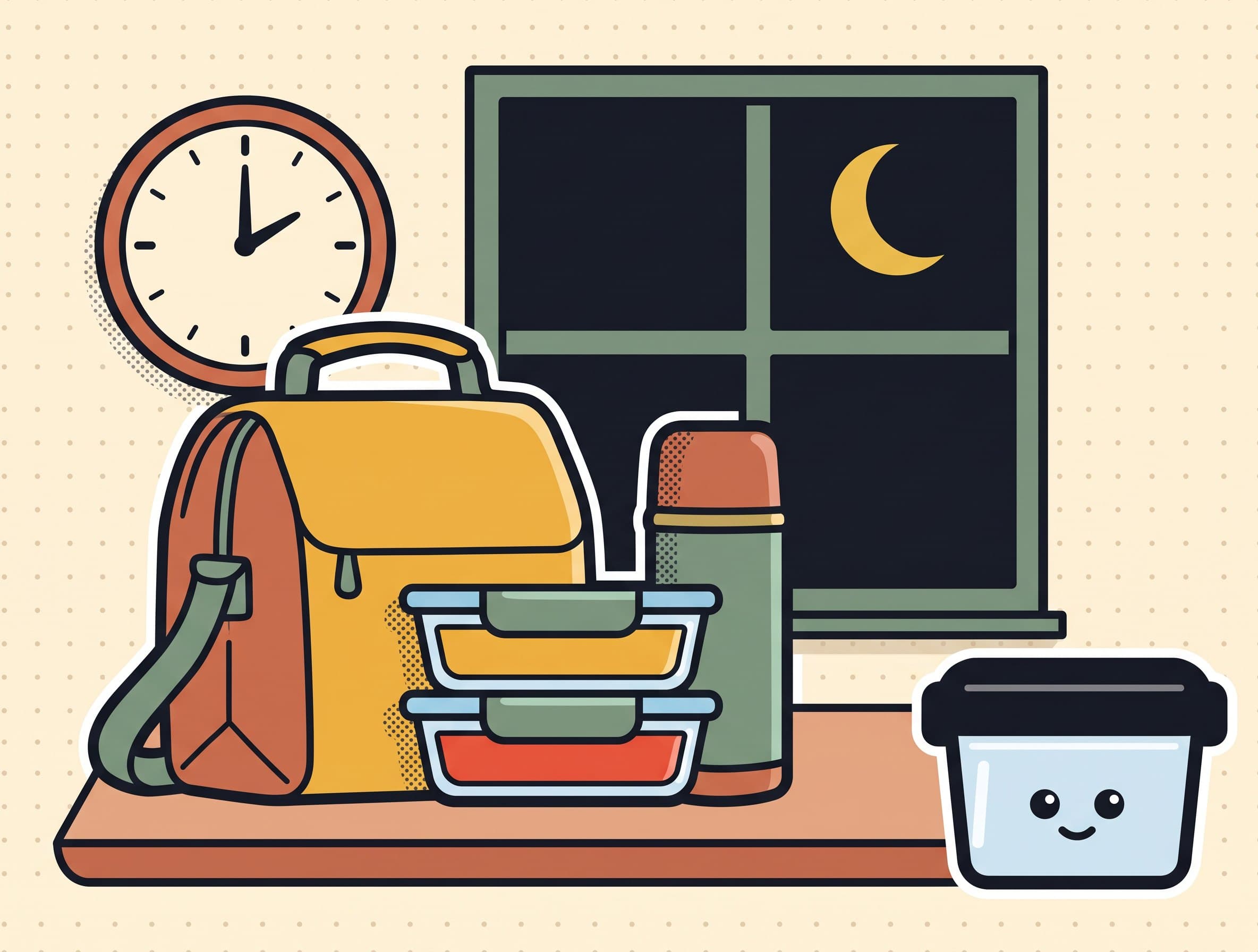
When lunch is at 3 am and the break room microwave has a queue, normal meal prep advice falls apart. Here is how to prep around nights, lates and rotations, with boxes that still work cold.
Meal prep for shift work starts with your rota, not the calendar. Cook on the day off before a run of shifts, prep only the shifts you are actually working, and plan three eating moments around each one: a proper meal before you leave, a lighter box in the middle of the shift and something small before you sleep. Make at least some boxes taste good cold, because a free microwave at 3 am is never a sure thing, and keep everything cold from your fridge to the work fridge. Here is how that looks in practice, with a plan for a run of three nights.
Why does normal meal prep fail on shifts?
Most meal prep advice assumes a Monday to Friday office week: cook on Sunday, lunch at noon, dinner at seven. Shift work breaks every part of that. Your Sunday might be a work night. Your lunch might be at 2 am. The break room microwave might be shared by twenty people, or missing altogether. And after a twelve hour night, the last thing anyone wants to do is cook.
The fix is not more discipline. It is a prep that follows the rota, boxes that work without a microwave, and something ready for the moment you get home.
When should shift workers meal prep?
- On the day off before a run of shifts. Three nights from Tuesday? Cook on Monday afternoon, while you are rested.
- Not on the first day after nights. Your body clock is all over the place; plan that day around a freezer meal instead.
- Twice in a long run. Four or more shifts in a row go past the 3 to 4 days FoodSafety.gov gives cooked leftovers in the fridge, so freeze the boxes for the last shifts on the day you cook and move them to the fridge the day before.
- Only for the shifts you are working. Days off are for fresh food, eating out or the freezer stash.
When should you eat on a night shift?
There is no single right schedule, but many night workers find a rhythm like this easier than forcing three normal meals into abnormal hours:
- Before the shift: your main meal, hot, at home. This is your dinner box.
- Middle of the shift: a lighter meal. A grain bowl, a soup or a wrap tends to sit better at 3 am than a heavy curry.
- The long stretch: snacks you can eat standing up, such as boiled eggs, yogurt, fruit, nuts, or vegetables with hummus.
- After the shift: something small before sleep, such as yogurt with fruit, toast with an egg, or half a bowl of soup. A big meal right before bed can make sleeping harder.
If you have a medical condition or work with a dietitian, follow their advice on timing. This is about making good food easy to reach, not about rules.
Should shift boxes be cold or microwave boxes?
Plan for both and let your workplace decide. If the microwave is reliable, any box that reheats well works. If there is a queue at break time, no microwave at all, or you eat in a vehicle, boxes that taste good cold are the safer bet.
- Noodle salads with a peanut or sesame dressing, kept in a separate pot.
- Couscous, quinoa or orzo salads with roasted vegetables, chickpeas and feta.
- Wraps and burritos filled with beans, chicken or eggs, wrapped tightly.
- Cold roast chicken thighs with a potato salad dressed in oil and vinegar rather than mayonnaise.
- A snack box of boiled eggs, hummus, cheese and crackers.
Boxes that need the microwave: chili, curry, dal, stews, pasta bakes and soups. Reheat them until steaming hot all the way through, 165°F (74°C), and stir halfway; a shallow box heats more evenly than a deep one. For more cold ideas, see our lunch box ideas from last night's dinner.
Rice is the one to watch. The UK Food Standards Agency advises eating cooked rice within 24 hours and reheating it only once, so rice for the third night is not a good plan. Use couscous, quinoa, noodles or potatoes instead.
What keeps in a work fridge?
A shared work fridge is not your fridge at home. It is opened constantly, often overfilled, and nobody checks the temperature. The USDA says cold food should stay at 40°F (4°C) or below, and a busy staff fridge can easily run warmer than that.
- Take only the boxes for this shift. Leave the rest at home.
- Use an insulated bag with at least two ice packs, as the USDA advises for packed lunches, on the commute and on shifts with no fridge at all.
- Put boxes at the back of the fridge, not in the door.
- Label each box with your name and the day it is for.
- Do not leave food out of the cold for more than 2 hours, or 1 hour above 90°F (32°C). That includes a box sitting on the dashboard or the desk.
What does a shift week meal plan look like?
Here is a plan for one person working three nights, Tuesday to Thursday, with Monday off before the run. It is cooked on Monday afternoon in about 75 minutes.
- Oven: chicken thigh traybake with peppers, red onion, oregano and lemon. Three portions, the hot dinner before each shift.
- Stove: sesame noodle salad with edamame, grated carrot, shredded cabbage and spring onion, the dressing in a separate pot. Three portions for the middle of each shift, all good cold.
- Snacks: six boiled eggs and a tub of hummus with carrot and pepper sticks.
- After the shift: Greek yogurt with fruit and oats, or toast with an egg. Nothing to cook.
- Freezer: one portion of soup or chili from an earlier prep for Friday, the first day off, when you will not want to cook.
The traybake is the hot meal at home, the noodles work with or without a microwave, and the snacks cover the stretch before morning. On a rotation, keep the same structure and move it: a late shift gets a dinner box at work and a small breakfast at home, an early shift gets a packed breakfast and lunch. If you want tools built around odd hours, our look at cooking apps for night shift workers compares a few.
How does Pann fit a shift rota?
Pann does not assume a Monday to Friday week. You pick exactly the days and meals you need food for, so a run of three nights can be three dinners, three lunches to eat mid shift and a snack for each, with nothing planned for the days off. It plans recipes that keep, merges them into one guided session for your day off, and packs one box per meal with its day and how long it keeps. At 3 am, the chat knows your current prep, so you can ask how long the Thursday box keeps or what to do with a leftover portion.

Pick the shifts you are working and the meals you need, and Pann plans one cooking session for your day off and packs a box per meal with its day and how long it keeps. Try it free for 7 days.
Frequently asked questions
What should I meal prep for night shift?
Food that tastes good cold or reheats fast: noodle and grain salads, wraps, chili, soups and traybakes, plus snacks such as boiled eggs, yogurt and hummus. Keep the heaviest meal for before the shift.
How do I keep meal prep cold at work without a fridge?
Use an insulated bag with at least two ice packs, as the USDA advises, and do not let food sit out of the cold for more than 2 hours, or 1 hour above 90°F (32°C).
When should I meal prep on a rotating schedule?
On the day off before each run of shifts. For runs longer than three shifts, freeze the boxes for the last ones on the day you cook and move them to the fridge the day before.
Can I take rice to a night shift?
Only on the day after you cook it. The UK Food Standards Agency advises eating cooked rice within 24 hours and reheating it only once. Use couscous, quinoa, noodles or potatoes for later shifts.