
What to Cook With a Rotisserie Chicken: 12 Meals
Strip a rotisserie chicken while it is still warm and you get roughly two to three meals for two people, plus a carcass for stock. Eat the breast first in sandwiches, wraps or salads while it is still moist, then use the darker leg meat in tacos, soups, curries, pasta and fried rice, where a sauce covers it. The USDA gives cooked chicken three to four days in the fridge, counted from when it was cooked.
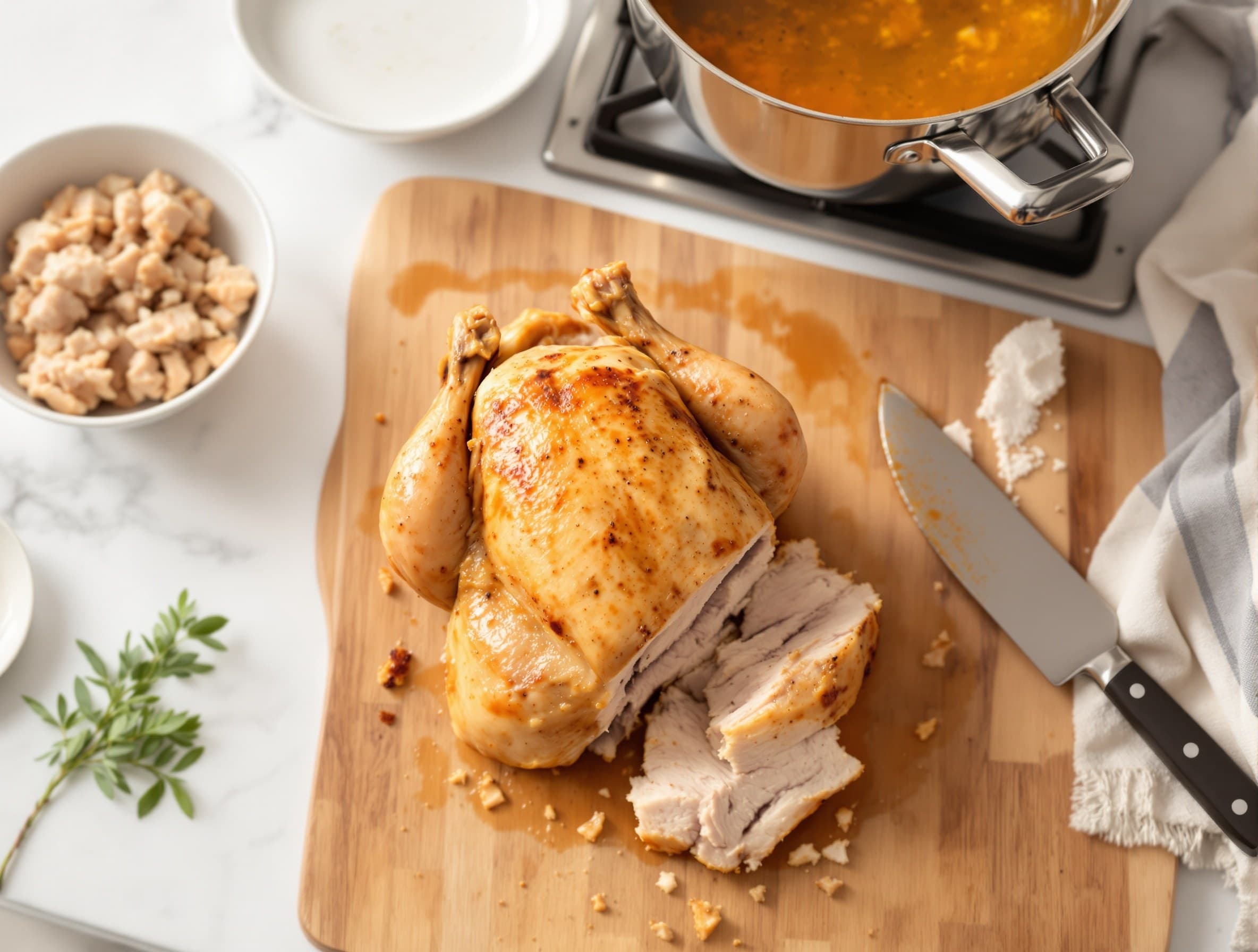
A shop-bought roast chicken is the best shortcut in the supermarket. Here is how to get three days of meals out of one bird, in the order that keeps the meat from drying out.
A rotisserie chicken is the one prepared food in the supermarket that is usually cheaper than making it yourself. It is also the fastest route to a real meal on a weeknight, because the slow part is already done. The mistake most people make is treating it as one dinner. Handled properly, one bird is two or three meals plus a pot of stock.
Two timings shape the whole plan. The USDA gives cooked chicken three to four days in the fridge, and that clock starts when the bird was cooked, not when you got it home, so a chicken that sat in the hot cabinet all afternoon has already spent part of its window. And a hot bird should be eaten or refrigerated within two hours of leaving the shop. UK guidance is tighter still, with the Food Standards Agency advising two days for leftovers rather than four.
Strip It While It Is Still Warm
This is the single habit that changes what a rotisserie chicken is worth. Cold chicken clings to the bone and tears; warm chicken comes off in whole pieces in about five minutes. It also cools faster off the carcass, which is exactly what you want inside that two-hour window.
- Pull the legs away from the body and twist. They should come off with almost no resistance.
- Run a knife down either side of the breastbone and lift each breast off whole.
- Turn the bird over and dig out the two oysters, the small round nuggets either side of the spine. They are the best meat on it.
- Pull everything else off with your fingers and keep it separate from the breast.
- Put the carcass, wings and skin straight into a pot or a freezer bag.
Day One: Eat the Breast
Breast meat dries out fastest and reheats worst, so spend it while it is still good. These need no cooking at all.
- Proper chicken sandwich: sliced breast, mayo, salt, black pepper, something crunchy. Warm bread if you can.
- Chicken caesar wrap: sliced breast, crisp lettuce, parmesan, dressing, rolled in a tortilla.
- Chicken and avocado salad: breast, avocado, tomato, red onion, lots of lemon and olive oil.
- Chicken banh mi: breast in a baguette with pickled carrot, cucumber, coriander and chilli mayo.
- Cold chicken and potato salad: the pairing that made cold roast chicken famous in the first place.
Days Two and Three: The Leg Meat Earns Its Keep
Darker meat holds moisture and stands up to reheating. Everything here is built so a sauce or a broth carries the chicken.
- Chicken tacos: shred the leg meat, warm it through with cumin, smoked paprika and lime, pile into tortillas.
- Chicken noodle soup: use the stock you made from the carcass, add noodles and the shredded meat at the very end so it does not go stringy.
- Quick chicken curry: onion, garlic, ginger, curry powder, coconut milk, then the chicken folded in for the last two minutes.
- Chicken fried rice: cold rice, a very hot pan, egg, peas, and the chicken in at the end. Our what to cook with leftover rice guide covers the cold-rice rule that makes this work.
- Creamy chicken pasta: garlic, a splash of cream or creme fraiche, parmesan, the chicken, and plenty of pasta water.
- Chicken quesadillas: shredded chicken and cheese, folded in a tortilla, pressed in a hot dry pan.
- Chicken and rice soup or congee: the softest landing for the last, driest scraps of meat.
The Carcass Is Half the Value
Throwing away the bones is throwing away the cheapest good stock you will ever make. It takes two minutes of work.
- Put the carcass, wings, skin and any bones in a pot. Add an onion cut in half, a carrot, a celery stick, a bay leaf and a few peppercorns. No salt yet.
- Cover with cold water by about three centimetres.
- Bring it just to a simmer, never a rolling boil, and leave it for two to three hours. A hard boil makes it cloudy and greasy.
- Strain it and get it into the fridge within two hours, in a shallow container so it cools fast. It keeps four days, or three months frozen.
- Skim the fat off the top once it is cold. That fat is excellent for roasting potatoes.
If you have no time on the day, freeze the carcass raw and make the stock whenever you feel like it. It loses nothing.
How Much Meat You Actually Get
A standard supermarket bird gives most people somewhere around 400 to 500 g of stripped meat, which is two solid meals for two people if the chicken is the centre of the plate, or three if it is one component among rice, beans or vegetables.
That second framing is the one that makes it good value. Treated as the star, one chicken is dinner. Treated as an ingredient, it is most of a week's lunches, which is the same logic behind our double batch meal prep guide.
From Bird to Decided Dinner
The hard part is never the cooking, it is deciding which of twelve things to make on a Tuesday with a tub of shredded chicken and whatever else is in the fridge.
Tell Pann you have cooked chicken and it builds the meal around it, sized to your goal, then walks you through it, without a single list to scroll.
Frequently asked questions
How long does rotisserie chicken last in the fridge?
The USDA gives cooked chicken three to four days refrigerated, and the clock starts when the bird was cooked rather than when you bought it. The UK Food Standards Agency is more conservative and advises eating leftovers within two days.
Can you freeze rotisserie chicken?
Yes. Strip it, portion it into bags with a spoonful of the tray juices, and freeze for up to three months. It comes out best in things with a sauce, such as curries, soups and pasta, rather than in sandwiches. The three to four month guidance is about quality, not safety.
Which part of a rotisserie chicken should you eat first?
The breast. It dries out fastest and reheats worst, so use it cold in sandwiches, wraps and salads on day one, and save the leg and thigh meat for cooked dishes later in the week.
Is a rotisserie chicken cheaper than roasting your own?
Usually, yes. Supermarkets price them as a footfall driver, and you are not paying for an hour of oven time. Roasting your own wins on control of seasoning and on having the fat and juices for gravy.
Should you let a hot chicken cool before refrigerating it?
No. Get it into the fridge within two hours of buying it, or one hour on a hot day. Strip the meat first so it cools quickly in a shallow container. Waiting for food to reach room temperature is the opposite of what food safety guidance advises.