
What to Do With Stale Bread: 10 Uses That Beat the Bin
Stale bread is not spoiled. It firms up mainly because its starch recrystallises as it cools, a process called retrogradation, with drying adding to it on an unwrapped loaf. Getting the crumb back above about 60C melts those crystals, so a damp loaf warmed in a 180C oven comes back partly soft for a few hours. Anything past that becomes croutons, breadcrumbs, panzanella, French toast or bread pudding.
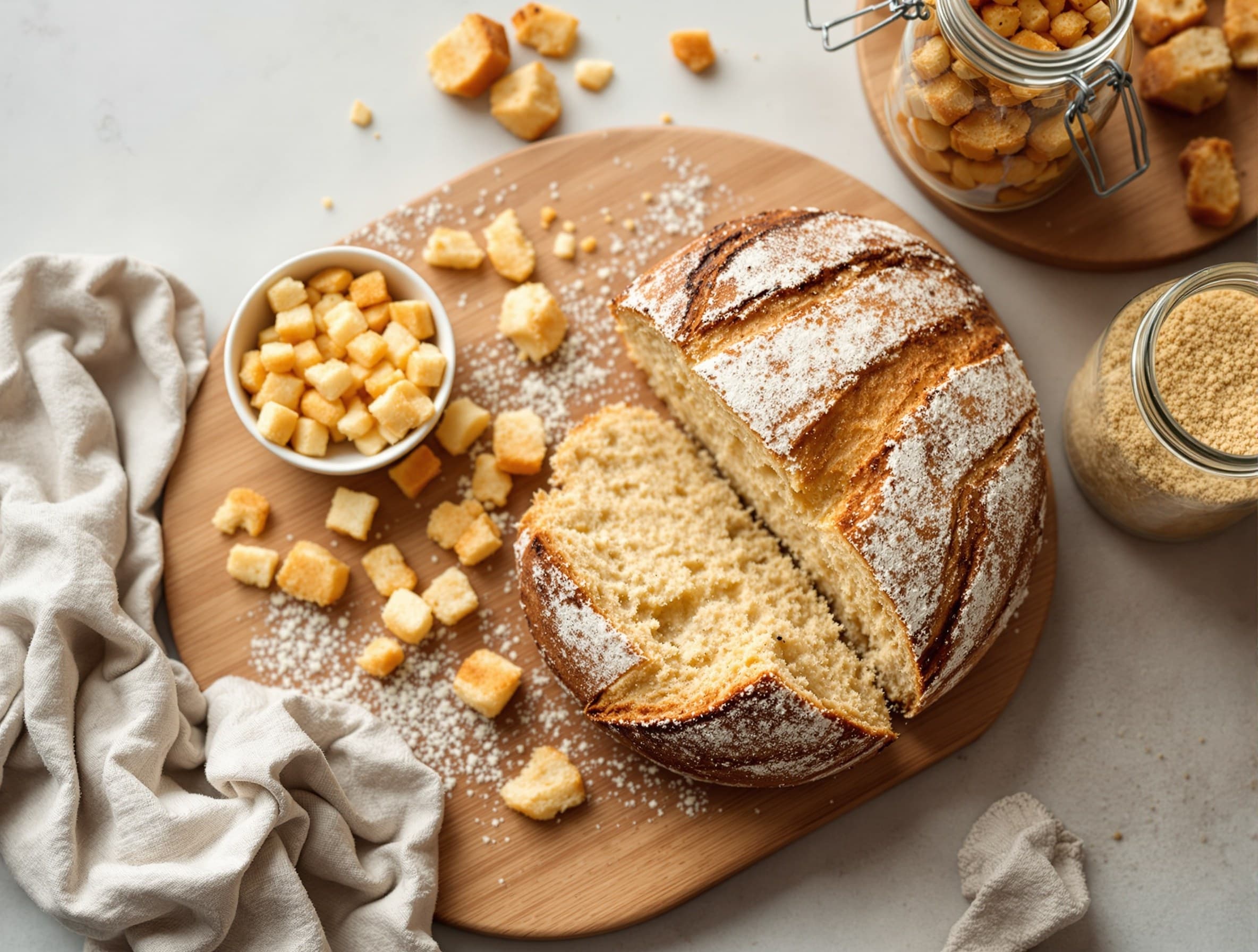
Stale bread is a different ingredient, not a failed one. Ten genuinely good things to make with it, and the reason a splash of water and a hot oven can bring a whole loaf partly back.
Bread is one of the most binned foods in a normal kitchen, and almost all of it is thrown away for the wrong reason. Stale is not off. Unless there is visible mould or an actual smell, a firm loaf is still perfectly good food, it has simply become a different ingredient.
What has happened is mostly a change in the starch. As bread cools and sits, the starch that gelatinised in the oven slowly recrystallises into a firmer structure, a process called retrogradation, and it pulls water out of the surrounding crumb as it goes. You can watch it happen in a sealed bag where almost no moisture escapes, which is why drying alone does not explain it. On an unwrapped loaf both things run at once.
The useful part for a cook is that some of it is heat-reversible, and that the fridge, which sits in the temperature range where retrogradation runs fastest, is the worst place you can keep bread.
First, Try Bringing It Back
Before you commit a loaf to croutons, spend ten minutes finding out whether it wants to be bread again. The crumb has to clear roughly 60C for the starch crystals to melt, so a warm oven will not do it.
- Heat the oven to 180C.
- Run the whole loaf briefly under a cold tap, or splash a few tablespoons of water over the crust. It should be damp on the outside, not soaked.
- Put it straight on the oven rack for 8 to 12 minutes depending on size.
- Take it out and let it sit for five minutes before cutting.
It comes out with a crisp crust and a much softer crumb. Be honest about the limits, though: it is a partial recovery, not a reset. Some of the crystallisation only melts at temperatures no domestic oven will reach, the softness lasts a few hours, and each time you repeat the trick it works a little less well because more water has gone. Do it for the meal in front of you, not for tomorrow.
Crust and Crumb Go Stale in Opposite Directions
It is worth knowing that stale does not mean one thing across a loaf. The crumb hardens as it loses water to the crystallising starch and to the crust. The crust does the reverse: it absorbs that migrating moisture and goes soft and leathery. That is why the oven trick works on both at once, driving water back out of the crust while heating the crumb, and why a blanket phrase like stale bread is dry bread is not much use in the kitchen.
Six Savoury Things Worth Making
- Croutons: torn, not cubed, so the edges catch. Toss with oil and salt and bake at 190C for 12 to 15 minutes. Torn croutons in a salad are the reason people finish salads.
- Breadcrumbs: blitz it and keep it in a jar in the freezer. It goes on pasta, on gratins, into meatballs, and it is what stops a burger falling apart.
- Panzanella: Tuscan bread salad. Stale bread, ripe tomatoes, red onion, olive oil, vinegar. The bread is supposed to soak up the tomato juice, which is exactly why fresh bread ruins it.
- Ribollita or pappa al pomodoro: two Italian soups built on the assumption that you have old bread. The bread thickens the pot and disappears into it.
- Migas: Spanish fried breadcrumbs with garlic, paprika and often chorizo or egg. A whole dinner from a heel of bread.
- A fried egg sandwich on toast made from the ends: the least glamorous and the one you will actually make.
Four Sweet Ones
- French toast: this is the classic use and it needs stale bread. Fresh bread turns to mush in the custard; firm bread drinks it up and holds its shape.
- Bread and butter pudding: layers of buttered stale bread, a simple custard, an hour in the oven. Invented specifically to use up old bread.
- Torrija: the Spanish version, soaked in milk and cinnamon, fried, then dusted with sugar. Better than the French one, quietly.
- Summer pudding: stale white bread lining a bowl, filled with cooked berries, pressed overnight.
Storing Bread So This Happens Less
The single most common storage mistake is the fridge. Bread firms up faster at fridge temperatures than on the counter, because that range is where the starch recrystallises quickest. The freezer is the opposite: below freezing the starch chains cannot reorganise at all, so staling effectively stops.
- A cut loaf lives cut side down on a board or in a paper bag for a day or two.
- A plastic bag keeps the crumb soft and ruins the crust. Choose which one you care about.
- For anything longer than two days, slice the loaf and freeze it. Frozen bread toasts straight from the freezer with no thawing and loses almost nothing.
If bread is one of several things going off in your kitchen on a regular basis, the pattern is usually shopping rather than storage, which our how to stop wasting food guide gets into, alongside what to do with expiring produce.
Old Bread, Decided Dinner
The reason stale bread gets binned is rarely that people do not know panzanella exists. It is that at seven in the evening nobody wants to work out which of ten options fits the other things in the fridge.
Tell Pann you have stale bread and whatever else is around, and it builds the meal around it, sized to your goal, then walks you through it.
Frequently asked questions
Is stale bread safe to eat?
Yes, as long as there is no mould and no off smell. Staling is a texture change driven by starch recrystallising and water moving around inside the loaf, not spoilage, so firm bread is still good food and is often better for cooking than fresh.
How do you make stale bread soft again?
Dampen the crust with a little water and warm the whole loaf in a 180C oven for 8 to 12 minutes, long enough for the crumb to get past about 60C. It comes back partly, not completely, the softness lasts a few hours, and repeating it works less well each time.
Why does bread go stale faster in the fridge?
Fridge temperatures sit in the range where the starch in bread recrystallises fastest, so a loaf firms up noticeably quicker there than on the counter. The freezer does the opposite and effectively halts staling, so freeze bread rather than chilling it.
Can you use stale bread for breadcrumbs?
Stale bread is the better choice. It blitzes into dry, even crumbs, while fresh bread gums up the blade and gives you damp clumps. Keep the crumbs in the freezer and use them straight from frozen.
What bread works best for French toast?
A firm day-old loaf with an open crumb, such as brioche, challah or a decent white sourdough. Fresh soft bread collapses in the custard, which is why French toast is a stale bread recipe by design.