Glass vs Plastic Meal Prep Containers: Which Should You Buy?
Glass is the better meal prep container for most people. It goes from fridge to microwave without questions about what heat does to the box, it does not stain or hold smells, and it lasts for years. Plastic wins on weight and breakage. Buy glass, and keep two or three plastic boxes for the days you carry lunch far.
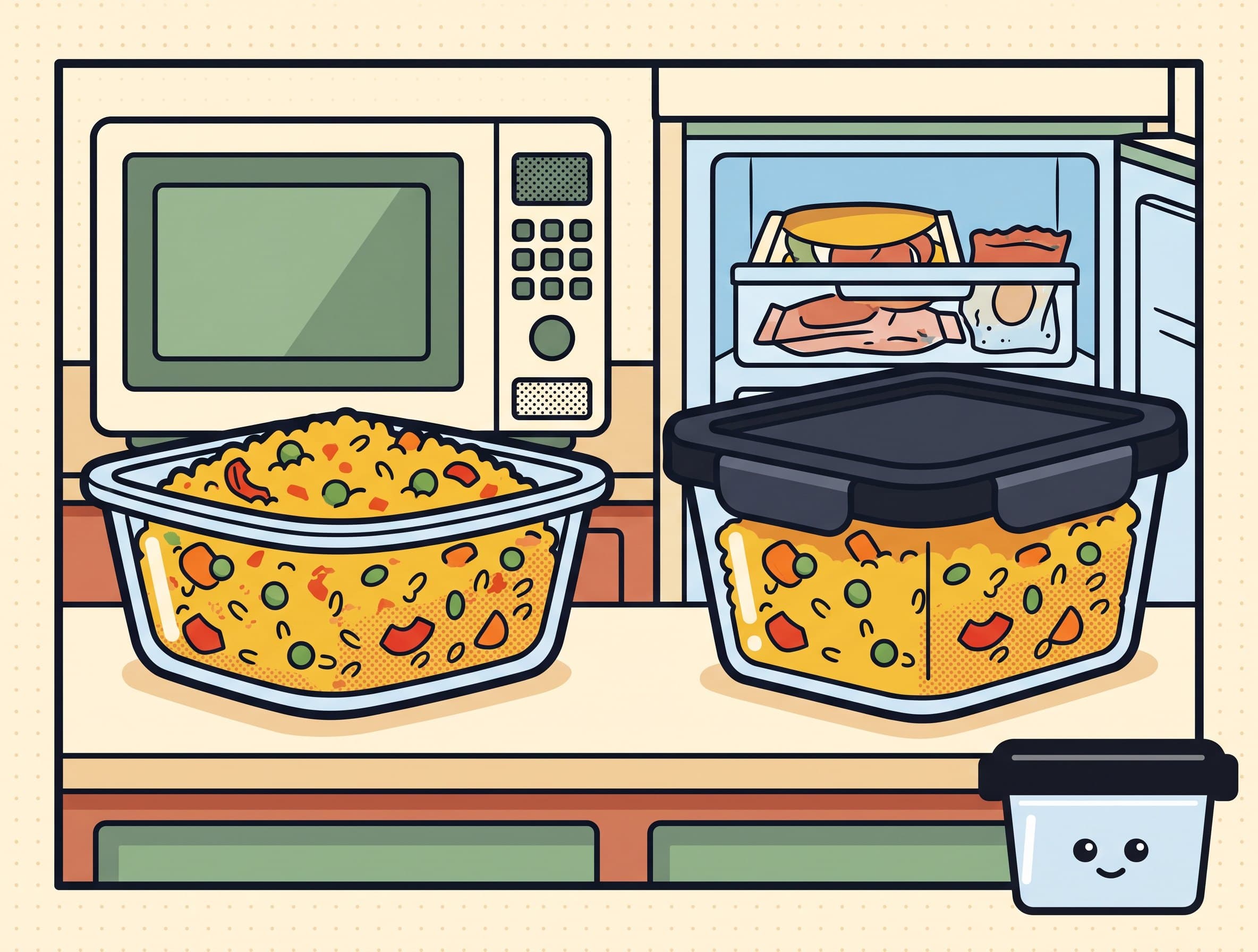
Every meal prep starter kit forces the same choice: heavy glass or light plastic. Here is how they compare where it matters, in the microwave, the freezer, your bag and the sink, and which to buy for which job.
For most people, glass is the better meal prep container. It reheats in the microwave without any question about what the heat does to the box, it does not turn orange after a chili, it does not keep last week's curry smell, and a good set lasts for years. Plastic clearly wins one job: carrying food. It is much lighter and survives being dropped. So our verdict is glass for the fridge, the freezer and the microwave, plus two or three light plastic boxes for the days you carry lunch a long way. Here is the comparison, point by point.
How do glass and plastic compare?
- Microwave: glass. Plastic is fine only if it is labelled for the microwave, and even then oily food can warp it.
- Freezer: both, if they are rated for it. Glass needs space at the top and a slow thaw; frozen plastic turns brittle and lids can crack when dropped.
- Oven: most glass bases can go in without the lid, if the maker says so. Plastic never.
- Weight: plastic, by a long way.
- Breakage: plastic. Glass can chip, crack or shatter if dropped or heated unevenly.
- Stains and smells: glass. Tomato, turmeric and garlic leave their mark on plastic.
- Lifespan: glass, as long as you do not drop it. Plastic scratches, clouds and warps over time.
- Lids: a draw. Most glass containers have plastic lids too, so the seal matters more than the base.
Is it safe to microwave plastic meal prep containers?
Only if the container is made for it. The USDA's Food Safety and Inspection Service says to use only containers labelled for microwave use, and warns that single use tubs, such as takeaway and margarine containers, can warp or melt, possibly letting harmful chemicals migrate into the food. Most plastic boxes sold for meal prep are polypropylene, marked with recycling number 5, and many are labelled safe for the microwave.
Two practical limits apply even then. Fatty and sugary food can get much hotter than water in the microwave, hot enough to warp or pit plastic. And scratched, cracked or cloudy boxes are past their best and worth replacing. If you would rather not think about it at all, reheat in glass or on a ceramic plate and use plastic for cold storage and carrying. That is the simplest rule, and it is the one we follow.
On BPA: it was used mainly in older hard polycarbonate plastics, and polypropylene is not made with it. Regulators do not fully agree on BPA itself; the US FDA considers it safe at current exposure levels, while the EU has moved to ban it in materials that touch food. A label saying BPA free tells you about one substance, not every additive, so the microwave rule above still applies.
Which is better in the freezer?
Both work if the container is rated for the freezer. The differences are about handling.
- Glass: leave a little space at the top, because liquids expand as they freeze. Do not pour boiling food into a frozen glass box or move one from the freezer to a hot oven; sudden temperature changes can crack it. Thaw it in the fridge first.
- Plastic: lighter and easier to stack, fine for soups and stews, but many plastics turn brittle when frozen, so a dropped lid can crack.
- Flat freezer bags: better than either for soups and grains, because they freeze fast, stack like files and thaw overnight.
Whatever you use, FoodSafety.gov suggests 2 to 3 months in the freezer for soups and stews, for the best quality. Our guide to meal prep that freezes well covers what to freeze and how to thaw it.
Which is better for commuting and the gym?
Plastic, clearly. A glass box with its lid weighs several times as much as a plastic one of the same size, and a week of glass lunches adds real weight to a backpack. Glass also breaks, which is a hazard in a gym bag or a crowded work fridge. If you walk, cycle or take the train with your lunch, plastic is worth having for that box alone.
Keep it cold on the way. The USDA advises an insulated bag with at least two ice packs for packed lunches, and no more than 2 hours out of the cold. For lunches that travel well, see our lunch box ideas from last night's dinner.
How do you stop plastic containers from staining?
Tomato sauce, curry and anything with turmeric or chili oil will tint plastic orange, and garlic and fish can leave a smell that survives the dishwasher. Glass does not have this problem, which is one more reason to keep saucy dishes in glass.
- Let food cool before it goes into plastic. Hot, oily sauce stains more.
- Rinse the box soon after eating instead of leaving it in your bag all afternoon.
- Leave a stained box in sunlight for a day. Tomato stains fade in the sun.
- A paste of baking soda and water lifts stubborn smells.
What should you look for in any meal prep container?
- A lid that seals properly. Leaks come from lids, not from the material, so test one with water before you buy a full set.
- Clear markings from the maker for microwave, freezer, dishwasher and oven.
- Sizes that match your meals: one main size for lunches and dinners, plus a few small pots for sauces, dressings and snacks.
- Shapes that stack. Rectangular boxes use fridge space better than round ones.
- Compartments only if you need them. A divided box keeps sauce off the rice, but a small separate pot does the same job in any box.
- Spare lids you can buy separately. On glass sets, the lid usually fails first.
Which should you buy?
Glass, for most people. Buy a set of glass boxes in one or two sizes for everything that lives in your fridge or freezer and gets reheated: chili, curry, stews, pasta bakes, traybakes. Then add two or three light plastic boxes for the days you carry lunch far, for the gym, and for cold food like salads and wraps that never see a microwave. If you cycle to work every day or pack lunches for children who drop things, flip the ratio. Glass is the default; plastic is the exception you choose on purpose.
How many you need follows from how many meals you prep. Pann packs one box per meal you pick, so Tuesday and Friday lunch means two boxes, each showing its day and how long it keeps, and anything that would not keep until its day goes into the freezer. Three days of lunch and dinner is six boxes, plus a few spares for the freezer.

Pick your days and meals, and Pann plans one cooking session, writes one shopping list sorted by aisle and packs one box per meal with its day and how long it keeps.
Frequently asked questions
Are glass meal prep containers better than plastic?
For most people, yes. Glass reheats without worry, does not stain or hold smells and lasts longer. Plastic is better for carrying food, because it is light and does not break.
Can glass meal prep containers go in the freezer?
Yes, if they are rated for it. Leave space at the top for liquids to expand and thaw in the fridge before reheating. Never move frozen glass straight into a hot oven.
Which plastic is best for meal prep?
Boxes made for food storage, usually polypropylene with recycling number 5, and labelled for the microwave if you plan to heat food in them. Do not reheat food in takeaway tubs, as the USDA advises.
How many meal prep containers do I need?
One per meal you prep, plus a few spares. Three days of lunch and dinner is six boxes, and a few small pots for sauces and snacks cover the rest.