Meal Prep That Freezes Well (and What Belongs in the Fridge)
Soups, stews, chili, curries, braised meat, meatballs, cooked grains, burritos, baked oats and egg muffins freeze well. Mayonnaise salads, boiled eggs, raw salad vegetables and crispy fried food do not. Freeze the boxes meant for later in the week on the day you cook, then thaw each one in the fridge the evening before.
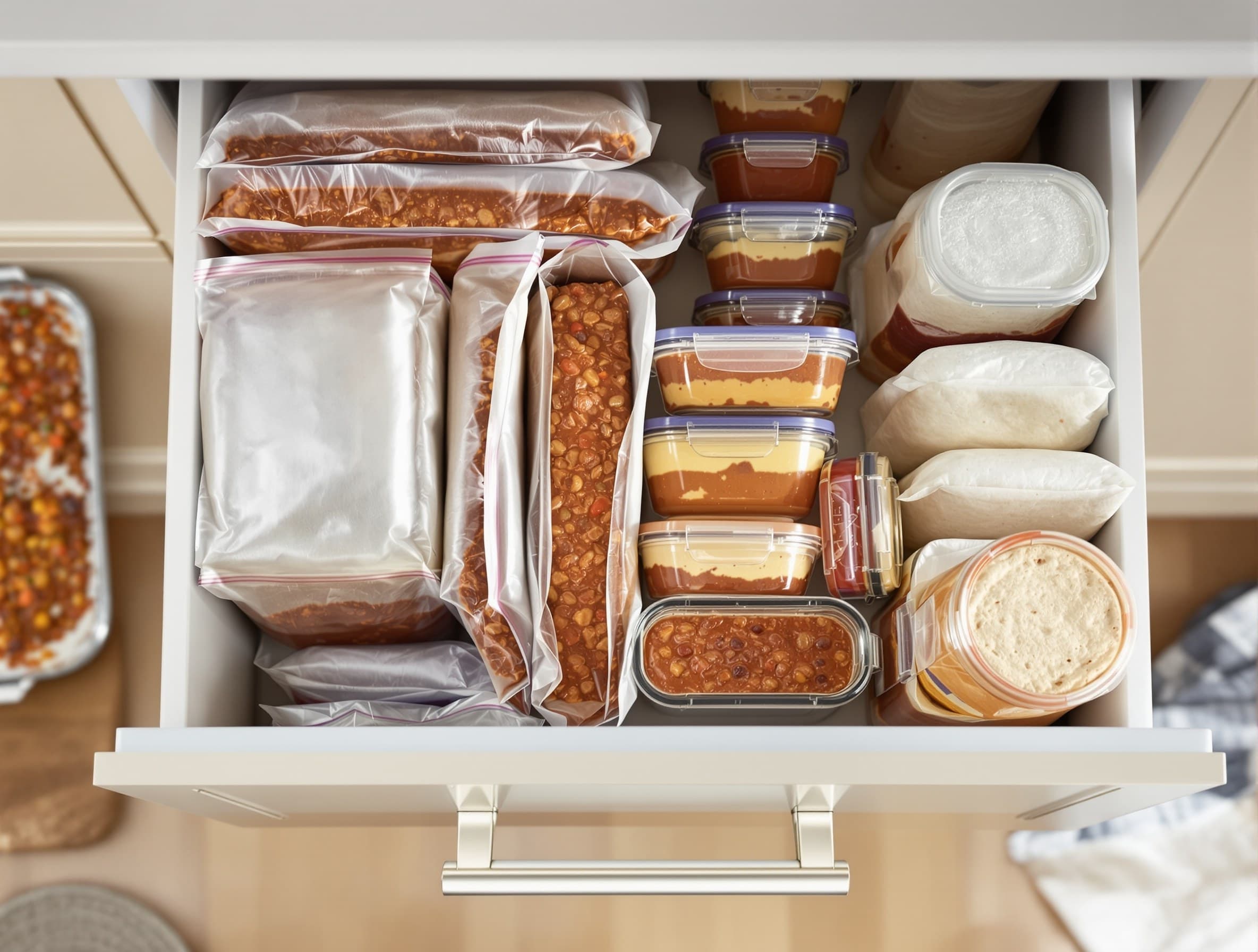
The freezer is what turns a three day prep into a five day prep. Here is what survives it, what turns to mush, and how to thaw a box safely the night before you need it.
Most cooked meal prep freezes well as long as it is saucy, braised or bready: soups, stews, chili, curries, braised meat, meatballs, cooked grains, burritos, baked oats and egg muffins all come back tasting like themselves. What does not freeze well is anything that relies on crunch or a raw texture, plus mayonnaise salads and boiled eggs. The practical rule for a week of boxes is simple. Keep the next three days in the fridge, freeze everything meant for later on the day you cook, and move each frozen box to the fridge the evening before you eat it.
Why freeze meal prep at all?
Because the fridge has a clock. FoodSafety.gov's cold storage chart gives cooked meat and poultry leftovers 3 to 4 days at 40°F or below, and soups and stews the same. The freezer stops that clock: the USDA says food kept constantly at 0°F stays safe, and the freezer times on the chart are about quality rather than safety. Cooked meat leftovers keep their best quality for 2 to 6 months, soups and stews for 2 to 3 months.
So if you cook on Sunday, Monday to Wednesday is fridge territory, and anything for Thursday onwards should go into the freezer the same day. Freezing is also how one session stretches further: a few extra boxes become backup meals for the week your plans change. There is more on cooking extra on purpose in our guide to double batch cooking.
Which meal prep freezes well?
- Soups, stews and chili. The best freezer food there is. Leave out pasta and add it fresh when you reheat, because it goes soft.
- Curries and dal. Coconut and tomato sauces freeze cleanly. Add fresh herbs or yogurt after reheating.
- Braised and shredded meat. Pulled chicken, beef ragù, carnitas. Freeze them with some of their cooking liquid so they do not dry out.
- Meatballs and patties. Freeze them cooked, in sauce or on their own, and reheat them in sauce.
- Cooked grains. Quinoa, farro, couscous and rice freeze well in flat bags. Cool rice quickly and get it into the freezer the day you cook it.
- Burritos and wraps. Wrap each one tightly and leave the lettuce and sour cream out.
- Egg muffins and frittata. FoodSafety.gov lists casseroles with eggs at 2 to 3 months in the freezer after baking.
- Baked oats, muffins, pancakes and waffles. Breakfast is the easiest meal to freeze, and most of it reheats straight from frozen.
- Roasted vegetables meant for soups and sauces. They lose their bite but are perfect blended or stirred into a stew.
What should stay in the fridge?
- Mayonnaise salads: egg, chicken, tuna and macaroni salad. FoodSafety.gov notes they do not freeze well, and the dressing tends to separate.
- Boiled eggs. The chart says do not freeze them; the whites turn rubbery. They keep 1 week in the fridge, which makes them an ideal fridge snack.
- Raw salad leaves, cucumber, radishes and tomatoes. They collapse when thawed. Pack them fresh on the day.
- Crispy food. Fried chicken, roast potatoes and croutons come back soggy. If you freeze them anyway, reheat in a hot oven, not a microwave.
- Cream and yogurt sauces. They can split. Freeze the base and stir the dairy in when you reheat.
- Pasta with little sauce. It turns soft. Undercook it by 2 minutes if you plan to freeze it, or freeze only the sauce.
How do you freeze meal prep so it still tastes good?
- Cool it fast. Get cooked food into the fridge or freezer within 2 hours, as the USDA advises. Split a big pot into shallow containers so the middle cools quickly.
- Portion before freezing. One box per meal means you only ever thaw what you are about to eat.
- Use containers made for the freezer, and leave a little space at the top, because liquids expand as they freeze.
- Freeze flat. Soups and grains in bags laid flat freeze faster, stack like files and thaw overnight.
- Label every box with what it is, the day you cooked it and the day you plan to eat it.
- Press out the air. Air causes freezer burn, the dry grey patches that are safe to eat but taste of nothing.
How do you thaw meal prep safely?
The USDA lists three safe ways to thaw: in the fridge, in cold water and in the microwave. Never on the counter, and never in hot water.
- In the fridge, the best way. Move tomorrow's box from the freezer to the fridge the evening before. A single portion is usually ready by lunch the next day. The USDA allows thawed leftovers 3 to 4 days in the fridge, but we plan to eat a thawed box the next day rather than stretch it.
- In cold water, if you forgot. Seal the food in a bag that cannot leak, submerge it in cold tap water and change the water every 30 minutes. Reheat it as soon as it has thawed.
- In the microwave, for right now. Use the defrost setting, then keep heating until it is steaming hot all the way through, and eat it straight away.
However you thaw it, reheat leftovers to 165°F (74°C) in the centre and bring soups and sauces back to a rolling boil, as the USDA recommends. Stir halfway so there are no cold spots. And when in doubt, throw it out: a box that smells off, sat out overnight or was thawed and forgotten is not worth the risk.
What does a fridge and freezer plan look like for a week?
Say you cook on Sunday for weekday lunches and dinners. Monday, Tuesday and Wednesday boxes go into the fridge. Thursday and Friday boxes go straight into the freezer once they are cool. On Wednesday evening, Thursday's two boxes move to the fridge; on Thursday evening, Friday's follow. Pick recipes for the frozen days that freeze well, a chili and a curry rather than a salad, and eat the fresh, crunchy meals early in the week.
This is the part that is easy to plan and easy to forget, so write the eat by day on every lid. If you are just starting out, the 4-container system for beginners is a gentle way to build the habit before adding the freezer.

Pick your days and Pann plans recipes that hold up, packs a box per meal with its day and how long it keeps, sends the late ones to the freezer and reminds you the evening before to thaw them.
Frequently asked questions
How long can meal prep stay in the freezer?
Kept constantly at 0°F it stays safe, according to the USDA; the limit is quality. FoodSafety.gov suggests 2 to 3 months for soups and stews and 2 to 6 months for cooked meat leftovers.
Can you freeze meal prep in glass containers?
Yes, if they are marked as suitable for the freezer. Leave space at the top for liquids to expand, let food cool before it goes in, and do not move a frozen glass container straight into a hot oven.
Can you refreeze thawed meal prep?
If it thawed in the fridge, the USDA says you can refreeze it, with some loss of quality. If it thawed in cold water or the microwave, reheat it to 165°F (74°C) first.
Should I freeze meal prep right away?
Yes, for anything you will not eat in the next three days. Freeze it on the day you cook, as soon as it has cooled, rather than on day three.