High Protein Meal Prep Without a Macro Spreadsheet
Build every box around a protein anchor that keeps and reheats well, such as chicken thighs, turkey chili, beef ragù, lentils, eggs or Greek yogurt. Portion it by eye, roughly a palm of meat or fish per meal, add a grain and vegetables, and cook twice a week so nothing sits in the fridge past day three.
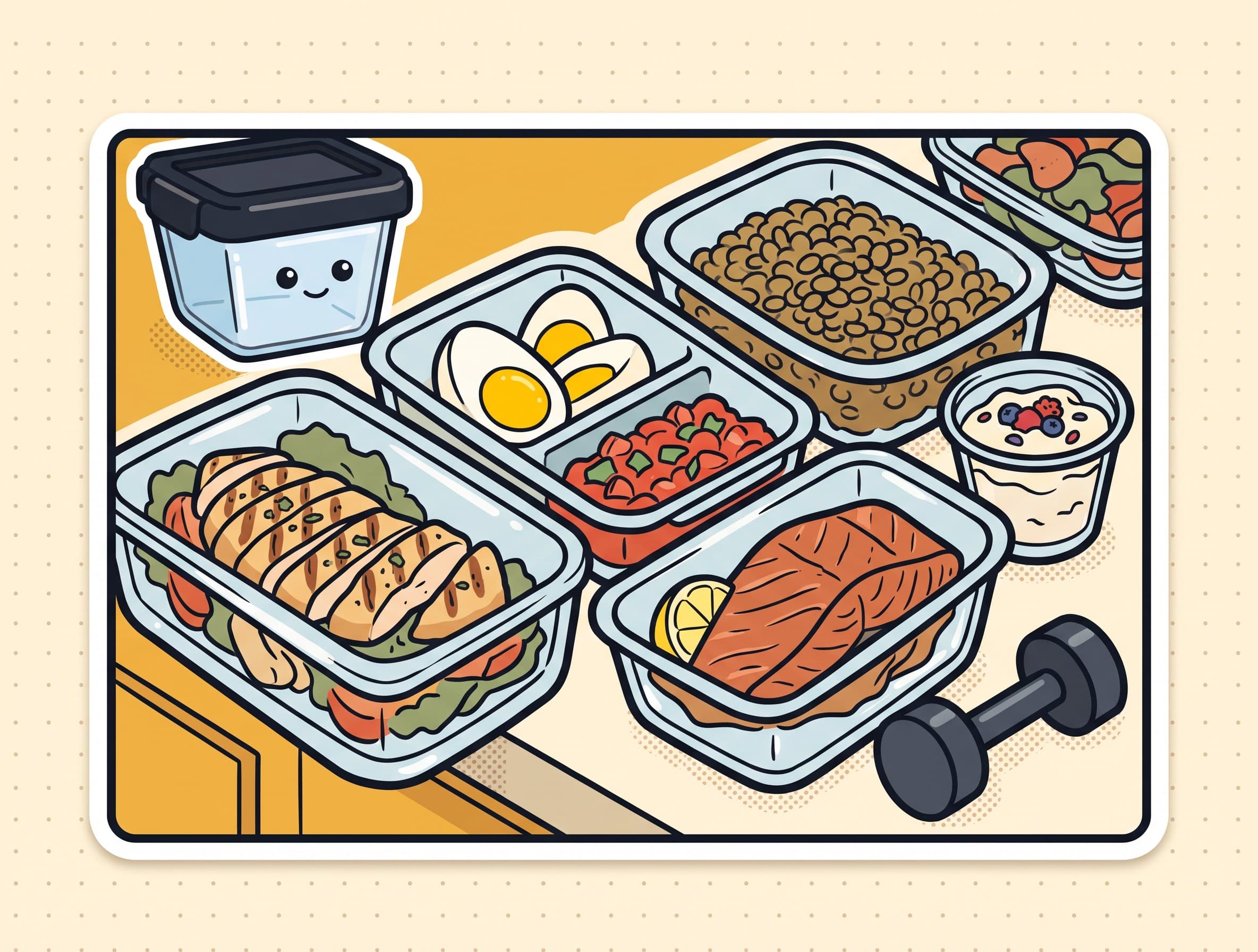
Four chicken breasts, plain rice and five identical boxes is not a plan, it is a punishment. Here is how to prep plenty of protein for training weeks without weighing, logging or eating the same thing all week.
High protein meal prep does not need a spreadsheet. It needs a protein anchor in every box, one that stays juicy after three days and a microwave, and a simple way to size portions by eye. Chicken thighs beat breasts, saucy dishes beat dry ones, and two short preps a week beat one long one, because cooked food only keeps 3 to 4 days in the fridge. Get those three things right and the protein takes care of itself, without weighing a single gram. Here is which proteins hold up, how to portion them and a sample training week.
Why skip the macro spreadsheet?
Because the spreadsheet is often what kills the habit. Weighing every portion and logging every box turns a cooking session into admin, and the plan falls apart the first time a recipe does not match the numbers. For most people who train, the aim is simpler: a solid serving of protein at every meal, on a routine they can keep for months. Showing up every week does more than precision on a Tuesday.
That does not mean ignoring protein. It means putting a proper portion in every meal and letting it add up. If you want one rough guide, a piece of cooked chicken the size of your palm is around 100 g, and USDA FoodData Central lists roasted chicken breast at about 31 g of protein per 100 g. A large egg has about 6 g. You do not need more maths than that.
Which proteins work best for meal prep?
The best meal prep proteins are the ones that come back from the fridge tasting like they did on Sunday. That usually means some fat, some sauce, or both.
- Chicken thighs. More forgiving than breasts: they stay moist after reheating and are hard to overcook. Roast, grill or braise them.
- Ground turkey or beef in a sauce. Chili, ragù, keema and meatballs in tomato sauce taste better on day two and freeze well.
- Braised and pulled meat. Shredded chicken, pork shoulder or beef cooked low and slow stays tender because it sits in its own liquid.
- Lentils and beans. Dal, bean chili and lentil soup carry real protein, cost little and reheat perfectly. Top them with yogurt or an egg for more.
- Eggs. Boiled eggs keep a week in the fridge, according to FoodSafety.gov, and egg muffins cover breakfast for days.
- Greek yogurt, skyr and cottage cheese. The easiest protein breakfast there is: no cooking, just portioning into jars with oats and fruit.
- Firm tofu and tempeh. Baked or pan fried, they hold their texture in the fridge and reheat without going rubbery.
- Tinned tuna and salmon. Not for cooking ahead, but a good backup to assemble at work when the cooked boxes run out.
Which proteins reheat badly?
- Plain chicken breast. Fine on day one, dry by day three. Slice it and keep it in a sauce, or eat it cold in a salad. Our guide on how to stop overcooking chicken helps it start out juicier.
- Prawns. They turn rubbery the second time they are heated. Eat them cold or cook them fresh.
- Steak. Reheated, it goes grey and tough. Slice it thin and eat it cold over a grain bowl.
- Fish fillets. Salmon is fine cold or gently warmed in the first two days; white fish dries out and fills the office kitchen with its smell.
- Scrambled eggs. They go watery and rubbery. Make egg muffins or a frittata instead.
How do you portion protein by eye?
Use your hand, a ladle and the box itself. They are always with you, and they are consistent enough for meal prep.
- Meat, fish or tofu: a piece the size and thickness of your palm per meal, or two if you are a big eater or training hard.
- Chili, curry or dal: one large ladle, about a third of a standard box, before the grain goes in.
- Grains and potatoes: a cupped handful, a little more on heavy training days.
- Vegetables: fill the rest of the box. You cannot really overdo them.
- Eggs: two boiled eggs make a snack that carries you to the next meal.
Then keep the portions the same from prep to prep. The point is not a perfect number. It is the same solid portion, every time.
How do you keep prepped protein juicy?
- Take poultry out at 74°C (165°F), measured in the thickest piece, not by the clock. Every degree past that is dryness you will taste on Wednesday.
- Store meat with some of its sauce or cooking juices, never dry in the box.
- Slice meat just before packing rather than days ahead, so less of it dries out.
- Reheat with the lid loose and a splash of water, stir halfway, and heat until steaming hot all the way through.
What does a high protein meal prep week look like?
Two short preps cover a training week inside the 3 to 4 day fridge window that FoodSafety.gov gives cooked leftovers. This plan is for one person: lunch and dinner on five weekdays, plus breakfast and a snack.
Sunday, about 90 minutes:
- Stove: turkey chili with black beans. Four portions: Monday and Tuesday dinner, Wednesday lunch, and one for the freezer.
- Oven: lemon and garlic chicken thighs with potatoes and green beans. Three portions: Monday and Tuesday lunch, Wednesday dinner.
- Breakfast: three jars of Greek yogurt with oats, frozen berries and a spoon of peanut butter, for Monday to Wednesday.
- Snack: six boiled eggs, good for the whole week.
Wednesday evening, about 60 minutes:
- Oven: beef meatballs, baked and then simmered in tomato sauce. Four portions: Thursday dinner, Friday lunch and two for the freezer.
- Stove: chicken and chickpea curry with spinach. Two portions: Thursday lunch and Friday dinner.
- Breakfast: two more yogurt jars for Thursday and Friday.
Rice is left out on purpose. The UK Food Standards Agency advises eating cooked rice within 24 hours, which does not suit a box for day three. Potatoes, quinoa and couscous hold up better, or freeze cooked rice in single portions and reheat it from frozen.
How does Pann handle a protein goal?
In Pann, your goal is a direction, not a number. Choose more protein and it nudges portions that way when it plans your prep; there is no calorie target, nothing to log and nothing to weigh. You pick the days and meals you need, it plans recipes that keep and merges them into one guided session across oven, stove and board, then packs one box per meal with its day and how long it keeps. Dislikes are left out, and every plan is checked against your allergies.

Set your goal to more protein, pick your training days and meals, and Pann plans one cooking session and packs a box per meal with its day and how long it keeps. Nothing to log, nothing to weigh.
Frequently asked questions
Do I need to count macros to meal prep for muscle gain?
No. A solid protein portion in every meal, roughly a palm of meat, fish or tofu or a big ladle of chili or dal, covers most people who train. If you work with a coach or have a medical target, follow their numbers.
What is the best protein for meal prep?
Chicken thighs, ground meat in sauce, braised meat, lentils, eggs and Greek yogurt keep and reheat best. Plain chicken breast, prawns and steak are better eaten cold or cooked fresh.
Can I meal prep chicken breast without it drying out?
Cook it to 74°C (165°F) and no further, store it sliced in a sauce, and reheat it with a splash of water and the lid loose. Or switch to thighs, which are far more forgiving.
Is rice a good carb for high protein meal prep?
Only for the next day. The UK Food Standards Agency advises eating cooked rice within 24 hours. For later boxes, use potatoes, quinoa or couscous, or freeze rice in portions.